[EXCLUSIVE for Ollie Readers!] 70% off + FREE Poop Bags For Life (for the first time ever!) Try now!
13 October 2026
8 MINS READ
How Do You Choose the Right Puppy Food for Dogs?
Bringing a new puppy home changes everything. Within days, you have a dozen nicknames, a camera roll full of the same adorable face, and a sneaking suspicion that the pet food aisle was designed to confuse you. Puppies grow fast, and their nutritional needs are fundamentally different from an adult dog’s. They need higher levels […]


Bringing a new puppy home changes everything. Within days, you have a dozen nicknames, a camera roll full of the same adorable face, and a sneaking suspicion that the pet food aisle was designed to confuse you.
Puppies grow fast, and their nutritional needs are fundamentally different from an adult dog’s. They need higher levels of protein, fat, vitamins, and minerals, in the right ratios, to build strong bones and muscles, develop their brains, and support a growing immune system. Choosing the right puppy food means looking past the marketing at four things: the life-stage statement on the label, your pup’s expected adult size, the type of food, and the company’s standards.
Key Takeaways
- Puppies need more protein and fat than adult dogs. AAFCO sets growth minimums at 22.5% protein and 8.5% fat on a dry matter basis. For adults, the minimums are 18% protein and 5.5% fat.
- Check the AAFCO statement first. Look for a food formulated for “Growth” or “All Life Stages.” An All Life Stages food meets puppy requirements, even without “puppy” on the label.
- Size changes what your pup needs. Large-breed puppies need controlled calcium and slow, steady growth. Toy breeds need small, frequent meals to keep their blood sugar stable.
- Fresh food is highly digestible and rich in moisture. Veterinary organizations advise against raw diets because of the risk of harmful bacteria.
- Every puppy is different. Plan to check in on portions regularly as your pup grows.

How Are a Puppy’s Nutritional Needs Different From an Adult Dog’s?
A puppy isn’t a miniature adult dog. Their bodies are busy building bones, developing neurological pathways, and forming an immune system, so they need a more nutrient-dense diet than a fully grown dog. That’s why the first rule of feeding a puppy is to skip adult maintenance formulas.
The Association of American Feed Control Officials (AAFCO) sets minimum nutrient levels for dog food on a dry matter basis. Foods for growth must contain at least 22.5% protein and 8.5% fat, compared to 18% protein and 5.5% fat for adults. Protein builds muscle, organs, and antibodies. Fat delivers concentrated energy and essential fatty acids.
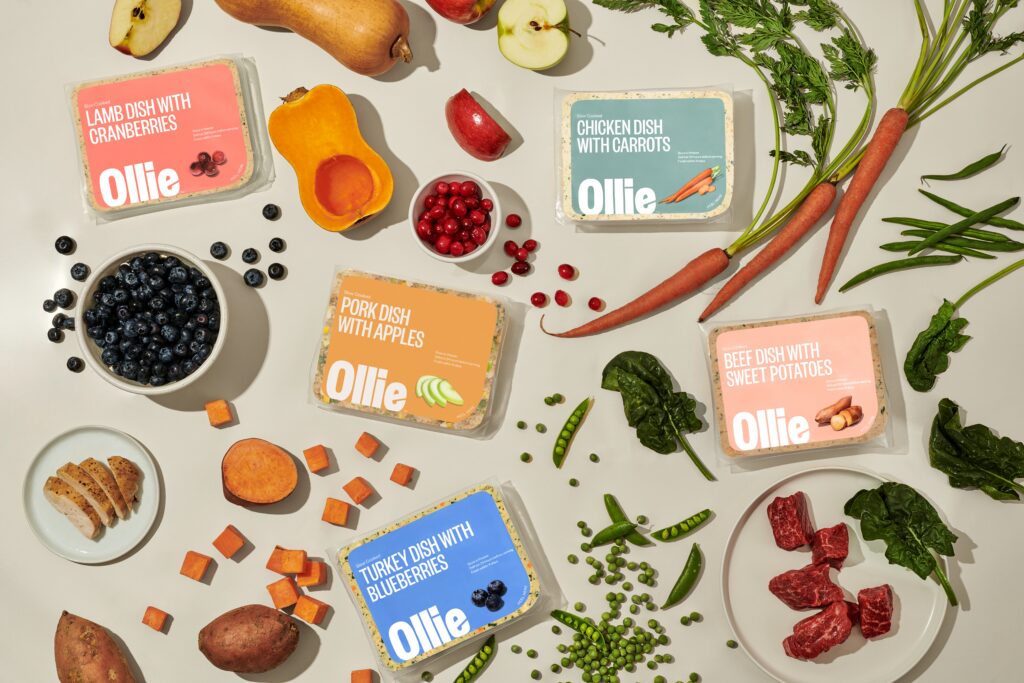
Many fresh diets go well beyond those minimums. Ollie’s Fresh recipes are protein-packed, made with real, human-grade meat, and formulated for All Life Stages, so the same recipes support growing puppies and adult dogs.
Why Is DHA Important for Puppies?
DHA is an omega-3 fatty acid that supports brain and eye development. In one study, puppies fed a DHA-enriched fish oil diet showed better learning, visual discrimination, and immune response than puppies fed lower-DHA diets. On the ingredient list, look for a marine source of omega-3s, like fish oil or algae oil.
What Should You Look for on a Puppy Food Label?
The most important text on any bag of dog food is the AAFCO nutritional adequacy statement. It tells you which life stage the food is complete and balanced for. You’ll usually see one of three:
- All Life Stages: Complete and balanced for growth, adult maintenance, and pregnancy or nursing. Because it meets the stricter needs of growing puppies, one recipe can carry your pup from puppyhood through their senior years.
- Growth: Balanced for puppies and pregnant or nursing dogs, but not intended for adult maintenance.
- Adult Maintenance: For fully grown dogs only. These foods don’t provide enough protein, calcium, or phosphorus for normal puppy growth.
If your pup will be big, read to the end of the statement. Growth and All Life Stages foods that are appropriate for large-breed puppies will say “including growth of large size dogs (70 lbs or more as an adult).”
You don’t need a bag with “puppy” on the front. A food labeled for All Life Stages meets the same growth requirements as a puppy formula. Ollie doesn’t make a separate puppy recipe for this reason. Our fresh recipes are formulated to meet the nutritional levels established by the AAFCO Dog Food Nutrient Profiles for All Life Stages, including growth of large size dogs (70 lbs or more as an adult). Every recipe is safe and complete for your pup through every stage that follows.
How Does Your Puppy’s Size Change What They Need?
A Great Dane puppy and a Chihuahua puppy grow on very different timelines. Size affects which label requirements to look for and how you feed them, from portion sizes to the number of meals a day.
Large and Giant Breeds
Large and giant breeds can take 12 to 24 months to reach skeletal maturity. Their biggest risk is growing too fast. Fast growth stresses developing bones and joints and can contribute to developmental orthopedic disease, including hip dysplasia and osteochondritis dissecans (OCD).
Calcium is key. AAFCO allows up to 2.5% calcium on a dry matter basis in most dog foods. Foods labeled for the growth of large size dogs are capped at 1.8%, with a calcium-to-phosphorus ratio between 1:1 and 2:1. Never add calcium, phosphorus, or vitamin D supplements to a complete and balanced diet.
Small and Medium Breeds
Small and medium breeds usually reach skeletal maturity between 9 and 12 months and face fewer orthopedic risks. Smaller dogs burn more calories per pound, so they benefit from calorie-dense food. Most can move from three meals a day to two at around six months old.
H3: Toy Breeds
Toy breeds (under 10 lbs as adults) mature fastest, often between 6 and 9 months. Early on, they face a specific risk: hypoglycemia, or low blood sugar. Toy pups under four months old typically do best with four to five small meals a day. If you notice lethargy, weakness, trembling, or disorientation, call your vet right away.
What Should You Ask a Puppy Food Company?
The World Small Animal Veterinary Association (WSAVA) recommends asking a few key questions before you choose a brand:
- Who formulates the food? Look for qualified nutrition experts on staff. At Ollie, our recipes are developed by a team that includes a PhD in Food Science, a food engineer, and a culinary nutritionist with an animal nutrition certification. They work in consultation with board-certified veterinary nutritionists and in-house veterinarians.
- What quality control measures are in place? Puppies’ immune systems are still developing, so food safety is critical. Ollie tests every batch for pathogens every day and completes a thorough nutrient analysis before launching any new recipe.
- Where is the food made? A trustworthy brand can tell you exactly who makes its food and where.

Fresh, Kibble, Raw, or Blended: Which Type of Food Is Best for Puppies?
| Diet type | What it is | Benefits | Drawbacks |
| Fresh | Gently cooked whole-food ingredients | Highly palatable, easy to chew, highly digestible | Needs fridge and freezer space, higher cost per day |
| Kibble | Dry food cooked at high heat | Convenient, shelf-stable, and budget-friendly | Low moisture, can be less digestible than fresh |
| Raw | Uncooked meat, organs, and sometimes bones | Popular with some pup parents | Risk of Salmonella, E. coli, and other pathogens; not recommended by the AVMA or AAHA |
| Blended | Fresh food mixed with baked food or kibble | Fresh food benefits with more flexibility | Requires careful portioning of both foods |
Fresh Dog Food
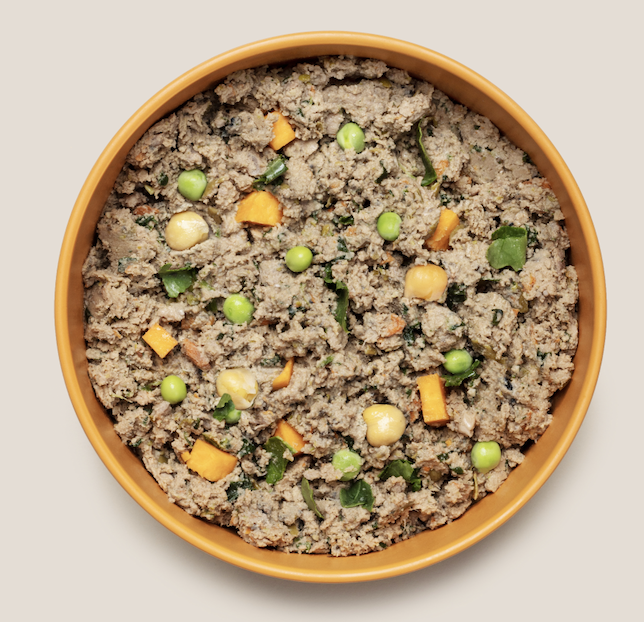
Fresh, gently cooked food like Ollie’s is made with whole-food ingredients you can actually see. Its high moisture content makes it appealing and easy for little mouths to chew. Research from the University of Illinois comparing fresh and extruded diets found that fresh food was more digestible and produced less stool. Our own data backs that up: across 896 puppies under 12 months, 96% reached healthy stool within three weeks on an Ollie fresh diet.
Kibble
Kibble is the most common type of dog food. It’s convenient, shelf-stable, and typically lower in cost per day, and many brands make complete, balanced kibble for growth, including formulas for large-breed puppies. Extrusion cooks ingredients at high heat and pressure and shapes them into dry pieces. Starches from grains, legumes, or potatoes help hold that shape. The result has around 10% moisture and is often less digestible than fresh food, so keep fresh water within easy reach. Kibble is also calorie-dense, which makes small measuring mistakes add up quickly. Use a measuring cup or kitchen scale instead of eyeballing scoops.
Raw Diets
The American Veterinary Medical Association (AVMA) and the American Animal Hospital Association (AAHA) both advise against feeding raw diets to dogs. That caution applies especially to puppies, whose immune systems are still developing. Raw meat can carry pathogens like Salmonella, Campylobacter, and E. coli, which can also cross-contaminate people in your home.
Blended Diets
Blending fresh food with a baked food or kibble gives you the benefits of fresh food with more flexibility. Pup parents often blend to manage costs, keep a shelf-stable option on hand for travel, or add fresh food to a routine their pup already knows. Both foods need to be complete and balanced for growth or All Life Stages. Because kibble and baked foods pack far more calories per cup than fresh food, portion each one based on its calorie density rather than splitting the bowl by volume.
In addition to our fresh recipes, Ollie also offers baked options, so you can mix them together to get the best of both.
What Are the Red Flags When Choosing Puppy Food?
- No AAFCO statement, which means the food isn’t guaranteed to be complete and balanced
- When a label says “intermittent or supplemental feeding only,” which signals a treat or topper, not a meal
- An adult maintenance statement only
- “Except for growth of large size dogs,” if your pup will reach 70 lbs or more
- Vague protein sources like “meat meal” or “animal by-products” instead of named meats like chicken, beef, or lamb
How Much Should You Feed Your Puppy?
Overfeeding can speed up growth in large breeds and add extra weight in small breeds. Underfeeding can stunt development and put toy breeds at risk of low blood sugar. Every puppy is different, and their calorie needs change quickly as they grow.
With Ollie, your pup eats the same All Life Stages recipes as adult dogs, with portions based on their profile details. Because puppies grow so fast, plan to revisit portions often. Regular Health Check-Ins, free for all members in the Ollie app, help you track your pup’s progress. If their portions need adjusting, we’re here to help.

Give Your Puppy a Strong Start
A complete and balanced, nutrient-dense diet from a company you trust sets your pup up for a long, healthy life by your side. Ollie’s fresh meal plans use human-grade ingredients and are formulated for All Life Stages, including large-breed growth, so your pup can eat the same recipes from puppyhood on. See how Ollie supports growing pups and build a meal plan for your pup today.
Tagged As:

The nutrition your dog needs,
the food they want.
Written by:




Enjoying our articles? Subscribe our Newsletters and get new articles directly to your inbox
You might also like

13 October 2026
8 MINS READ
Puppy Diarrhea: Causes, At-Home Care, and When to Call the Vet
If your new pup has diarrhea, it’s common, and most pup parents run into it at some point. Loose stool is one of the most common issues in a puppy’s first weeks and months at home. Your pup is…
by Ollie Pets
17 September 2026
6 MINS READ
Lester’s Remarkable Recovery with Ollie: A Journey from Rescue to Revival
How can Ollie help your pup? Learn about one dog’s journey to health with Ollie!
by Ollie Pets
24 June 2026
12 MINS READ
The Ultimate Dog Food Ingredient Guide: How Much Do Ingredients Actually Matter?
Staring at a dog food label shouldn’t feel like reading a chemistry textbook. Learn how to decode the first 5 ingredients, spot marketing red flags, and understand why your pup needs nutrients, not…