[EXCLUSIVE for Ollie Readers!] 70% off + FREE jerky + FREE Puzzle Toy (it’s back!) Try now!

Reviewed by: Catherine Carchedi, MS, DVM; Lindsay Cassibry, MPH, DVM; and Brittany White, PhD.
Key Takeaways
- Meal frequency drops as puppies grow. Most puppies eat 3 to 4 meals a day at 8 to 12 weeks, 3 meals from 3 to 6 months, and 2 meals from about 6 months on. Toy and giant breeds may need more frequent meals for longer.
- Portions depend on more than age. Your pup’s expected adult size, activity level, and the calorie density of their food all affect how much they need. Use a feeding chart as a starting point, then adjust based on body condition.
- Large-breed puppies should grow slowly. Look for food labeled for large-breed growth, and keep your pup lean to protect developing joints.
- Scheduled meals beat free-feeding. Set mealtimes make potty training easier and help you spot appetite changes quickly.
- Every puppy is different. Check your pup’s body condition often and revisit portions as they grow.
Feeding your puppy is one of the first big jobs of pup parenthood, and one of the most confusing. One minute you’re marveling at the softest ears you’ve ever felt. The next you’re standing in your kitchen at 6 a.m., scoop in hand, wondering whether it’s too much, too little, or exactly right.
The answer depends on your puppy’s age, breed, expected adult size, and energy level. Too much food can lead to excess weight and joint strain, especially in large breeds. Too little can slow development or cause low blood sugar, especially in small breeds. This guide covers how much to feed your puppy by age and size, how often to feed them, what a daily schedule can look like, and how to tell whether your pup is getting the right amount as they grow.
How Are a Puppy’s Nutritional Needs Different From an Adult Dog’s?
In their first year, puppies build bones, develop their brains and nervous systems, and add muscle at an incredible rate. That’s why they need more protein, fat, vitamins, and minerals (especially calcium and phosphorus) than adult dogs. They also need calorie-dense meals so they can get the fuel they need without filling their small stomachs too much.
Look for a food formulated for “Growth” or “All Life Stages” on your food label’s AAFCO statement. An All Life Stages food meets the same growth requirements as a puppy formula, even without “puppy” on the label. All of Ollie’s recipes are formulated for All Life Stages, so your pup can eat the same recipes from the day you bring them home through adulthood.
How Much Should You Feed a Puppy? (Puppy Feeding Chart by Weight & Age)
Use this chart as a general starting point for how much to feed your puppy each day, based on their estimated adult weight and current age. Amounts are total cups per day, split across meals.
| Estimated Adult Weight | 1.5–3 months | 4–5 months | 6–8 months | 9–11 months | 1–2 years |
| 3–12 lb | ½ – 1 cup | ⅔ – 1⅓ cups | ½ – 1½ cups | Feed as adult | Feed as adult |
| 13–20 lb | ½ – 1¼ cups | 1⅛ – 2 cups | ¾ – 1⅓ cups | ½ – 1½ cups | Feed as adult |
| 21–50 lb | ½ – 1½ cups | 1½ – 2¾ cups | 1⅛ – 2⅔ cups | 2 – 3 cups | 2 – 4¼ cups |
| 51–75 lb | ⅝ – 2⅔ cups | 1½ – 4 cups | 1½ – 3¾ cups | 2½ – 4¾ cups | 2½ – 6¼ cups |
| 76–100 lb | 1 – 2⅔ cups | 2⅞ – 3¾ cups | 2⅞ – 6⅓ cups | 3⅞ – 7 cups | 5½ – 11 cups |
| 101+ lb | 2⅔ cups + ⅓ cup for every 10 lb over 100 lb | 3¾ cups + ⅓ cup/10 lb | 6⅓ cups + ⅓ cup/10 lb | 7 cups + ⅓ cup/10 lb | 11 cups + ⅓ cup/10 lb |
The amounts above are general estimates for a typical dry puppy food. Calorie density varies widely between foods. One cup of kibble might have 300 calories, while another has 500, and fresh food is portioned differently altogether. Always check the feeding guide for your pup’s specific food, and adjust based on your vet’s advice and your puppy’s body condition.
If you feed your puppy Ollie, there’s no need to painstakingly measure out cups of food. Your pup’s meals arrive pre-portioned based on their profile. Puppies grow fast, so plan to check in on portions often. If your pup’s needs change, our team can help adjust their plan anytime.

How Do You Figure Out How Much to Feed at Each Meal?
Several factors shape how much your puppy needs:
- Age: Younger puppies need more frequent, smaller meals.
- Expected adult size: Large and giant breeds grow longer and need careful portion control.
- Activity level: A high-energy pup burns more calories than a laid-back one.
- Health: Your vet may adjust portions for a specific health need.
- Food type and calorie content: Kibble, wet food, and fresh food all have different calorie densities.
To calculate portions yourself, start with the daily amount your food’s feeding guide recommends for your pup’s expected adult weight. Then divide it across the number of meals they eat each day.
For example, say your puppy is 4 months old and expected to weigh 18 pounds as an adult. Your kibble’s feeding guide recommends 2 cups a day, but your pup is very active, so your vet suggests bumping it to 2¼ cups. Split across three meals, that’s ¾ cup per meal.
Not sure how big your pup will get? Our puppy growth guide walks through typical growth by size and age, and the Waltham Puppy Growth Charts can help you and your vet track progress against expected growth curves.
How Often Should You Feed a Puppy? (Puppy Feeding Stages by Age)
A puppy’s feeding schedule changes quickly in the first year. Young puppies have small stomachs and high energy needs, so they eat small meals often. As they grow, meals get bigger and less frequent.
| Age | Meals per day |
| 8-12 weeks | 3-4 |
| 3-6 months | 3 |
| 6-12 months | 2 |
| 12+ months | 2 (large and giant breeds may need more time) |
Stage 1: 8 to 12 Weeks
Most puppies come home around 8 to 10 weeks, after they’ve weaned from their mother’s milk and moved to solid food. At this age, they should eat three to four small, evenly spaced meals a day. Frequent meals help keep their blood sugar steady and keep their small stomachs from getting overloaded. This is especially important for toy breeds, which are prone to low blood sugar.
Here’s a sample schedule for a puppy eating four meals a day:
|
Time of Day |
Action |
|
6:00 AM | Wake up and go to the bathroom |
|
6:30 AM | Eat breakfast |
7:00 AM | Explore the yard or play with toys. Take potty breaks after eating, playing, and waking from naps, and every hour or two while awake. Puppies should nap a lot throughout the day. |
|
9:30 AM | Training session #1 (5–10 minutes). Use pieces of your pup’s daily food as rewards. |
11 AM | Eat lunch |
3:00 PM | Afternoon meal |
| 4:00 PM | Training session #2 (5–10 minutes) |
6:30 PM | Dinner, ideally while the family eats. Afterward, a potty break and one last play session to help your pup settle in for a good night’s rest. |
10:00 PM | Final potty break before bed |
Stage 2: 3 to 6 Months
Around 3 months, most puppies can move to three meals a day. A steady morning, midday, and evening routine helps regulate digestion and makes potty training easier. Lining up your pup’s meals with family mealtimes can make the schedule easier to keep.
Here’s a sample schedule for a 3- to 6-month-old puppy:
|
Time of Day |
Action |
7:00 AM |
|
7:15 AM | Eat breakfast |
7:30 AM | Potty break (puppies usually need to go 15–30 minutes after eating). |
8 AM – 12 PM | Playtime, training, and a long morning nap |
12:20 PM | Midday meal |
1:00 PM | Potty break, followed by afternoon play and another nap |
| 6:00 PM | Dinner |
6:30 PM | Potty break |
8:00 PM | Consider picking up the water bowl to help prevent overnight accidents. Make sure your pup has had plenty to drink during the day. |
| 10:00 PM | Final potty break before bed |
A routine like this helps your pup learn your household’s rhythms and makes their bathroom habits more predictable. Calorie needs shift during this stage, so ask your vet to check your puppy’s body condition at regular visits and review how much they’re eating.
Stage 3: 6 to 12 Months
Around six months, most puppies’ growth starts to slow, and their stomachs can hold more at once. At this point, many can move to two meals a day, one in the morning and one in the evening. This is usually the schedule they’ll keep as adults. Giant breeds may need to stay on three meals a day a bit longer, since they can keep growing for up to two years.
If your pup eats a puppy-specific formula, you’ll also start thinking about switching to adult food. If they eat an All Life Stages food like Ollie, there’s no switch to plan. More on that below.
Stage 4: After 1 Year
Most small and medium dogs reach their adult size by about 12 months. Large and giant breeds can keep growing until around 2 years old and may still act very much like puppies. According to the American Kennel Club, a giant-breed puppy can grow from about one pound at birth to as much as 150 pounds within 18 months. Bigger dogs need more time and support, so check with your vet about portions and food as they finish growing.

How Does Breed Size Affect How Much a Puppy Eats?
Size shapes how fast your puppy grows, how long they grow, and how carefully you need to manage their portions.
Toy and Small Breeds (Under 20 lbs as Adults)
Small breeds like Chihuahuas, Pugs, and French Bulldogs mature quickly, often reaching adult size between 9 and 12 months. They have fast metabolisms and very small stomachs.
- 2–3 months: Frequent, small meals help prevent low blood sugar.
- 4–6 months: Calorie needs are high to support their final growth stretch.
- Portion focus: Nutrient-dense meals in small volumes.
Medium Breeds (21–50 lbs as Adults)
Breeds like Beagles, Cocker Spaniels, and Australian Shepherds grow steadily and predictably, usually reaching maturity around 12 months.
- 2–4 months: Steady growth calls for gradual portion increases.
- 5–8 months: Growth starts to taper, and portions level off.
- Portion focus: Regular body condition checks to prevent extra weight gain.
Large Breeds (51–90 lbs as Adults)
Golden Retrievers, Labradors, and Boxers grow longer, often taking 12-18 months to reach adult size.
- 2–6 months: Rapid skeletal growth. This is when overfeeding can do the most harm.
- 7–12 months: Muscle development continues as growth slows.
- Portion focus: Careful portion control for slow, steady growth.
Giant Breeds (90+ lbs as Adults)
Great Danes, Mastiffs, and Saint Bernards can take up to two years to finish growing.
- 2–8 months: Fast bone growth that depends on the right balance of minerals.
- 9–18 months: Slow, steady filling out of their frame.
- Portion focus: Controlled calcium and calories to protect developing bones and joints.
Do Large-Breed Puppies Need Different Food?
Large and giant breed puppies need to grow slowly. If they get too much calcium, or too many calories, they can grow too fast, which raises their risk of developmental orthopedic disease, including hip dysplasia.
That’s why AAFCO limits calcium in foods labeled for the growth of large-sized dogs. If your puppy will weigh 70 pounds or more as an adult, look for a growth or All Life Stages food whose AAFCO statement says “including growth of large size dogs (70 lbs or more as an adult).” All of Ollie’s recipes meet this standard. Whatever you feed, keep your big pup lean, and never add calcium or other mineral supplements to a complete and balanced diet unless your vet recommends it.
Should Puppies Have Access to Food All Day?
Filling a bowl in the morning and letting your puppy graze, known as free-feeding, is generally not recommended. Here’s why scheduled meals work better:
- Easier potty training: What goes in on a schedule comes out on a schedule. Grazing all day means bathroom breaks at unpredictable times.
- Appetite monitoring: With set meals, you know exactly how much your pup is eating. If they skip breakfast, you’ll notice right away rather than days later.
- Weight control: Many puppies will eat until the bowl is empty, hungry or not, which can lead to unhealthy weight gain.
- A stronger bond: When you feed at set times, your puppy learns to look to you, which can make training easier.
Is Your Puppy Eating Enough?
Feeding charts are a great baseline, but your puppy’s body condition is the best way to tell whether their portions are right.
Signs Your Puppy May Be Underfed
- Ribs, spine, or hip bones that are easy to see
- Low energy or lethargy that’s unusual for a puppy
- A dull, flaky coat
- Constant searching for food or eating unusual things, like dirt
Signs Your Puppy May Be Overfed
- No visible waistline when you look down at them from above
- Ribs that are hard to feel when you press lightly on their sides
- Frequent loose stools or gas
- Tiring quickly during play or exercise
Try the rib test: Place your thumbs on your puppy’s spine and spread your fingers across their rib cage. You should be able to feel their ribs easily under a thin layer of fat, similar to the bones on the back of your hand. If you have to press hard to find them, talk to your vet about reducing portions. If the ribs feel very sharp or are easy to see, your pup may need more food.

When Should You Switch From Puppy Food to Adult Dog Food?
If your pup eats a puppy-specific formula, the switch to adult food depends on their size:
- Toy and small breeds: around 9 to 12 months
- Medium breeds: around 12 months
- Large breeds: around 12 to 15 months
- Giant breeds: around 18 to 24 months
Vets generally recommend staying on puppy food longer rather than switching too early, so check with yours before you make the change.
If your pup eats an All Life Stages food like Ollie, you don’t need to switch. The same recipes work from puppyhood through adulthood. What changes is how much they eat. As growth slows, your pup will likely need fewer calories per pound, so keep an eye on their body condition and adjust portions as needed.
How Do You Transition Your Puppy to a New Food?
When you change foods, do it slowly. Puppies have sensitive stomachs, and a sudden switch can upset their digestion. Most pups do best with a 7- to 10-day transition, easing in a little more of the new food each day:
- Days 1–2: 25% new food, 75% current food
- Days 3–4: 50% new food, 50% current food
- Days 5–6: 75% new food, 25% current food
- Day 7 and on: 100% new food
Puppies often need a little more time to adjust, so if your pup has loose stools or an upset stomach, pause for a day or two before moving to the next step. If you’re switching to Ollie, a free New Food Check-In in the Ollie app lets our vet team review your pup’s progress along the way.
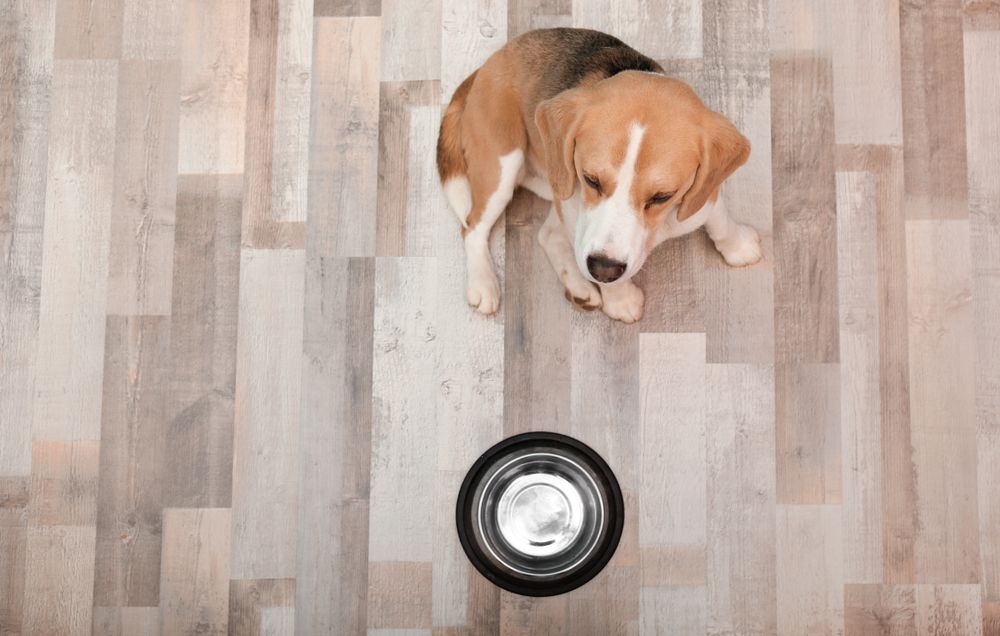
What Should You Do If Your Puppy Won’t Eat?
You’ve measured their portions, you set the bowl down, and your puppy just stares at it. Before you panic, consider a few common reasons a puppy might skip a meal:
- A new environment: Leaving their mother and littermates is a big change, and stress can temporarily dampen a puppy’s appetite. Give them a calm space and a day or two to settle in.
- Teething: Between about 3 and 6 months, puppies lose their baby teeth, and their gums can get sore. A softer food, like fresh food or kibble soaked in warm water, can make mealtime more comfortable.
- Holding out for something better: If your pup learns that skipping a meal leads to treats or table scraps, they may start waiting for the good stuff. Stick to the routine, and pick up the bowl after 15 to 20 minutes if they don’t eat.
When to call your vet: If your puppy skips more than a meal or two, seems very lethargic, is vomiting, or has severe diarrhea, call your vet right away. Toy breeds and very young puppies can develop low blood sugar or become dehydrated quickly, so call sooner for them.
What Are the Best Tips for Feeding a Puppy?
Set a routine: Consistent mealtimes and exercise help puppies feel secure and speed up potty training.
Count training treats as part of their daily calories. Treats add up quickly, especially during training. Choose low-calorie treats, break them into bite-size pieces, or use pieces of your pup’s daily food as rewards. Keep treats to no more than 10% of daily calories.
Choose a food formulated for growth or All Life Stages. Check the AAFCO statement on any food you’re considering. For large-breed puppies, make sure it includes the growth of large-breed dogs.
Try a puzzle or slow feeder. Eating too fast can lead to indigestion, vomiting, gas, or bloat. A puzzle toy or slow feeder helps your pup slow down and adds some mental enrichment to mealtime.
Why Feed Your Puppy Fresh Food?
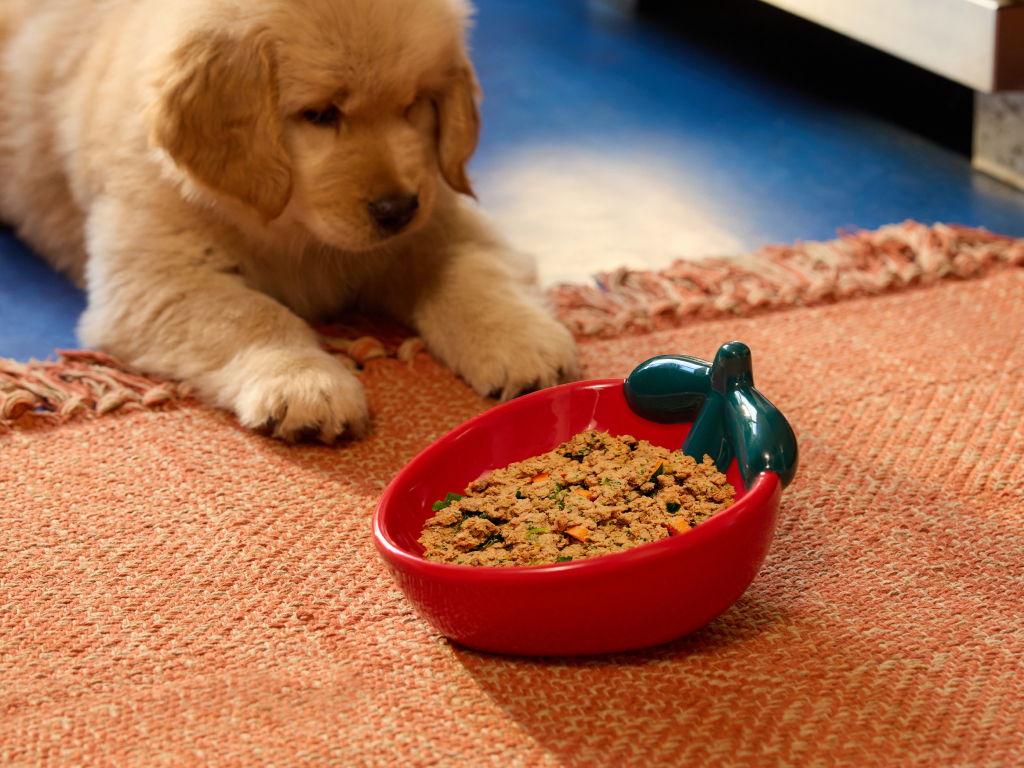
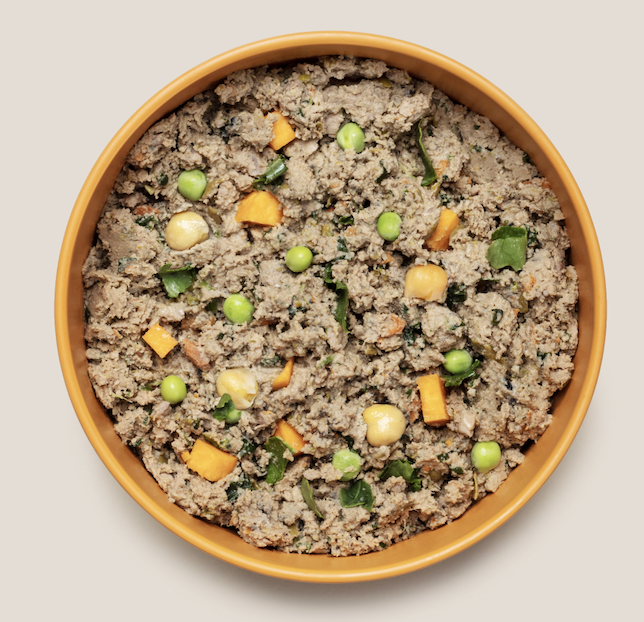
Fresh, gently cooked food is made with real, recognizable ingredients, and its soft texture is easy for little mouths to chew. Ollie’s fresh recipes are developed by our team with board-certified veterinary nutritionists and made with human-grade proteins like chicken, turkey, beef, pork, and lamb. They offer:
- Fewer ingredients, so you know exactly what’s in your pup’s bowl
- Minimal processing, with gentle cooking that preserves nutrients
- No fillers or artificial ingredients, like corn, wheat, or soy
- Easy digestibility, with protein options like turkey and lamb for sensitive stomachs
- Antioxidants from ingredients like blueberries, spinach, and kale
- Omega-3 fatty acids from fish oil, including DHA and EPA to support brain development
And because every recipe is formulated for All Life Stages, you can rotate proteins to keep things interesting without ever needing to switch to an adult formula.
Feeding Your Puppy for the Long Run
Raising a puppy is equal parts joyful and exhausting. A consistent feeding schedule, the right portions for their size, and regular body condition checks lay the groundwork for a long, healthy life together. That means more playtime, longer walks, and plenty of cuddles, which makes all those early wake-up calls worth it.
Ollie’s fresh meal plans take mealtime off your plate with pre-portioned, human-grade meals formulated for All Life Stages and delivered to your door. See how Ollie supports growing pups and build a meal plan for your pup today.
The Ollie blog is devoted to helping pet parents lead healthier lives with their pups. If you want to learn more about our fresh, human-grade food, check out ollie.com. Elizabeth Wieck contributed to this article, and it was reviewed by our in-house team of veterinarians and scientists, Catherine Carchedi, MS, DVM; Lindsay Cassibry, MPH, DVM; and Brittany White, PhD.
Disclaimer: This article and the Ollie blog is for informational purposes only and is not a substitute for professional veterinary advice, diagnosis, or treatment. If your dog is showing signs of illness and/or injury, always consult your veterinarian promptly. Every dog is different, and any dietary change should be discussed with your veterinarian. Ollie is not a prescription or therapeutic diet and is not intended to prevent, treat, or manage any medical condition. Always work with your vet to determine the best care plan for your individual pup, especially if they’ve been diagnosed with a health condition.
Tagged As:

The nutrition your dog needs,
the food they want.
Written by:
Lindsay Cassibry, MPH, DVM Dr. Lindsay Cassibry is the Veterinarian at Ollie and brings over 8 years of veterinary experience, combining her expertise in veterinary science, nutrition, and public health to advance pet nutrition and overall animal wellness. She holds a Doctorate in Veterinary Medicine from Louisiana State University, a Master’s in Public Health from St. George’s University, and a Bachelor’s in Nutrition from the University of Alabama. With this strong academic foundation, Dr. Cassibry has specialized in veterinary nutrition, further honed by her experience at DIG Labs, where she led innovative research in pet health solutions. At Ollie, Dr. Cassibry is dedicated to pushing the boundaries of veterinary nutrition, continually working to enhance the health and well-being of pets everywhere.


Enjoying our articles? Subscribe our Newsletters and get new articles directly to your inbox
You might also like

20 October 2026
7 MINS READ
Why Is My Puppy Throwing Up? A Guide for Pet Parents
Is your puppy vomiting? This guide explains why it happens, how to help, when it’s normal, and when it’s time to get your vet on the phone—no guesswork needed.
27 September 2026
5 MINS READ
Is Fresh Dog Food Cooked or Raw?
Wondering if fresh dog food means raw meat or something cooked? Learn what “gently cooked” really means and how to safely navigate fresh feeding for your dog.
26 September 2026
9 MINS READ
How Ollie’s Fresh Food Meets (and Exceeds) WSAVA Guidelines on Selecting Pet Foods
Discover how Ollie’s fresh dog food recipes go above and beyond WSAVA standards to deliver complete, balanced, and evidence-based nutrition.
by Christine Miller, Director of Food Safety, Quality, and Regulatory