[EXCLUSIVE for Ollie Readers!] 70% off + FREE jerky + FREE Puzzle Toy (it’s back!) Try now!


Reviewed by: Catherine Carchedi, MS, DVM; Lindsay Cassibry, MPH, DVM; and Brittany White, PhD.
What is the best food for poodles?
- The best food for a poodle is complete, balanced, built on high-quality protein, portioned to their size, and served in smaller, regular meals rather than one big bowl.
- Poodles are highly intelligent, trainable, people-oriented dogs that come in three sizes (standard, miniature, and toy), so there is a poodle for nearly every kind of home.
- Their curly coat is low-shedding and often easier on people with allergies, though no dog is truly hypoallergenic.
- Two care priorities stand out: a serious grooming commitment and a tendency toward sensitive digestion, with standard poodles also carrying a risk of bloat (GDV).
The poodle has been turning heads for centuries, and not just for their haircuts. Underneath that curly coat is a smart, athletic water dog, bred to swim out after ducks and quick enough to learn just about anything you teach. Part of what makes the breed so versatile is that it comes in three sizes: a four-pound toy and a sixty-pound standard share the same sharp mind and low-shedding coat, even if they are not the same dog to feed, exercise, and care for. This guide covers the poodle pros and cons, what that famous intelligence is like to live with day to day, the health issues worth knowing, and how to feed a poodle in a way that works with their sometimes-sensitive digestion.
Poodles are one of the breeds Ollie feeds most, and it is a fitting match. Their tendency toward sensitive digestion and their size-specific needs, from a tiny toy to a large standard, are exactly what our fresh, pre-portioned meals are built for, with whole ingredients that go easy on the stomach and portions measured to each individual dog.
See Ollie’s fresh meal plans for poodles →
Poodle quick facts (standard, miniature, and toy)
- Breed group: Non-Sporting Group (standard and miniature) and Toy Group (toy poodle)
- Sizes: Standard, over 15 inches and roughly 40 to 70 pounds; miniature, 10 to 15 inches and about 10 to 15 pounds; toy, 10 inches and under and about 4 to 6 pounds
- Life expectancy: Around 10 to 18 years, with the smaller varieties often living longest
- Coat: Curly, low-shedding, low-allergen single coat that comes in many solid colors
- Temperament: Very smart, active, proud, eager to please, and deeply people-oriented
- Origin: Developed centuries ago as a water retriever (the name traces to a German word for splashing), and today the national dog of France
- Best known for: Off-the-charts intelligence. Poodles are consistently ranked among the smartest of all dog breeds [1]
Pros of owning a poodle
- Poodles make excellent family dogs. They are affectionate, people-loving, and adaptable, and they tend to do well with children and other dogs when raised with them [1].
- They shed very little. That single curly coat sheds far less than a typical double coat, which means less hair on the sofa and, for many people, fewer allergy flare-ups. It’s worth saying plainly, though: no dog is fully hypoallergenic, so anyone with serious allergies should spend time around poodles before committing.
- They are remarkably easy to train. Poodle intelligence is the breed’s headline trait. They pick up obedience, tricks, and complex tasks quickly and genuinely enjoy the work, which is why they have starred in circuses and excel in obedience and agility.
- They are gifted service and therapy dogs. Smarts plus sensitivity plus a range of sizes make poodles unusually versatile working dogs. A standard can be the right build for mobility assistance, while a toy or miniature can shine doing therapy visits in hospitals and care homes.
- There is a poodle for almost any space. From a toy that is content in a studio apartment to a standard that will happily run trail miles with you, the three sizes mean the breed fits a wide range of homes and lifestyles, as long as the mental and physical exercise needs are met.
Cons of owning a poodle
- The grooming is a real commitment. That low-shedding coat keeps growing, so it needs frequent brushing to prevent matting and a professional groom every four to eight weeks.
- They need a lot of mental stimulation. Without training, puzzles, and engagement, that intelligence gets redirected into nuisance barking, chewing, or inventing their own entertainment. They are rarely content to be idle lap dogs.
- They can be emotionally sensitive. Poodles are tuned in to their environment and can startle at loud noises or get rattled by household chaos and tension. Some show that stress physically, including through digestive upset.
Poodle intelligence and temperament
This is a breed that learns fast, remembers what it learns, and notices everything. Owners routinely describe poodles figuring out latches, doors, and routines on their own, which is charming until your poodle has taught itself how to get into the treat cabinet.
That intelligence comes packaged with a particular personality. Poodles are devoted to their families and often a little reserved with strangers, warming up on their own timeline rather than flinging themselves at every new person. They are typically quiet for their size and not big barkers, which makes them good neighbors. And they retain the water-dog enthusiasm of their retriever roots, so many love to swim and to play long games of fetch.
Poodles want to be involved, they bond hard, and they can struggle with long stretches alone. Give a poodle a job, a routine, and plenty of interaction, and you get one of the most responsive, attuned companions in the dog world. This is also why poodles tend to be discerning about their care and their food: an alert, sensitive dog notices when something is off.
Poodle health issues to know about
Poodles are generally long-lived and robust, and responsible breeders screen their dogs for known inherited conditions [1]. Still, there are predispositions worth understanding, and some of them differ by size. Across all three sizes, poodles can be prone to progressive retinal atrophy (an inherited eye disease that gradually reduces vision), epilepsy, hip dysplasia, and thyroid issues. Standard poodles carry a few specific risks:
- Addison’s disease (an adrenal hormone deficiency that can cause vague symptoms like lethargy and digestive upset)
- Sebaceous adenitis (an inflammatory skin condition that affects the coat), gastric dilatation-volvulus
- Bloat (covered in its own section below), and a higher rate of certain cancers.
Toy and miniature poodles skew toward the issues common in small dogs: luxating patella (a kneecap that slips out of place), dental crowding, a risk of low blood sugar (hypoglycemia) in very young puppies, and collapsing trachea.
None of this should scare anyone off the breed. It is a map of what to watch for, what to ask a breeder about, and what to keep an eye on with your vet over your dog’s life.
Poodles and bloat (GDV): what standard poodle owners should know
Bloat, known medically as gastric dilatation-volvulus or GDV, is a sudden, life-threatening emergency in which the stomach fills with gas and can twist on itself, cutting off blood flow. It comes on fast and requires immediate veterinary care [2]. It matters here because standard poodles are a deep-chested breed, and deep, narrow chests are the single biggest risk factor for GDV [2][3].
Know the warning signs, because minutes count: a swollen or distended belly, unproductive retching (trying to vomit with nothing coming up), drooling, pacing and restlessness, and signs of pain or distress. If you see these, treat it as the emergency it is and get to a vet immediately [2].
Beyond chest shape, the identified risk factors include having a close relative who has had GDV, older age, eating quickly, and a nervous or anxious temperament [3]. The feeding habits that may help lower the risk are practical ones: serve smaller, more frequent meals instead of one large one, use a slow-feeder bowl if your poodle gulps their food, and keep mealtimes calm. For high-risk dogs, it is worth asking your vet about a preventive surgery called gastropexy, which tacks the stomach in place [2].
Poodle sensitive stomach and digestion
Do poodles have stomach problems? More often than many breeds, yes. Poodles of all sizes tend toward sensitive digestion, and because they are emotionally attuned dogs, stress and routine changes can show up in their stomachs.
Consistency is important, and a steady, high-quality diet is better than frequently switching, which itself can upset a sensitive system. Whole, digestible ingredients tend to sit better than filler-heavy or highly processed foods. And when you do need to change foods, go slowly, because an abrupt switch is one of the most common causes of digestive upset.
Some poodles also have genuine food sensitivities or allergies, which can show up as itchy skin, ear issues, or GI symptoms. Working out a true food allergy is a process best done with your vet, often through a careful elimination diet. If your poodle has ongoing digestive trouble, that is a conversation to have with your veterinarian rather than a problem to keep guessing at.
Poodle nutritional needs by size
A toy or miniature poodle has a tiny stomach and a fast metabolism. Small dogs burn a surprising number of calories per pound, which means they generally do best on calorie-dense, highly digestible food split into smaller, more frequent meals. Very young toy puppies in particular need regular feeding to avoid blood sugar dips. Dental crowding is common in small mouths, so food and chew textures that support oral health are a plus.
A standard poodle is a large, athletic dog with large-breed considerations: enough quality protein to maintain real muscle, support for hardworking joints, and the bloat-aware feeding approach above, namely smaller and more frequent meals rather than one big serving.
Across every size, a few commonalities ring true. Quality, named protein should anchor the diet to support that athletic build. Skin and coat support through omega-3 fatty acids matters more for poodles than for most breeds, because the signature coat is partly a nutritional output and because poodles are prone to skin issues like sebaceous adenitis. And digestibility is central, since poodles of all sizes lean toward sensitive stomachs, so whole, recognizable food diets like Ollie’s tend to serve them better than filler-heavy formulas.
Build your poodle’s perfectly portioned plan →
How much should I feed my poodle?
Because a poodle feeding guide has to stretch from a four-pound toy to a seventy-pound standard, there is no single daily amount that fits the breed. The right portion depends on your dog’s size first and foremost, then their life stage and activity level, and the goal is always to keep them at a lean, healthy body condition you can confirm with your hands: ribs easily felt, a visible waist from above, and a tucked-up belly from the side.
This is where Ollie’s calorie-measured approach is especially useful for a breed with this much size variation. Instead of guessing with a scoop, the cleaner method is to feed a known number of calories matched to your specific dog’s weight, spay/neuter status, and activity, then adjust based on body condition. Ollie’s plans are portioned to each dog’s exact daily calorie needs, which takes the estimating out of feeding a toy and a standard.
What is the best food for poodles?
The best food for poodles is defined by qualities, not by a single product. For this breed, prioritize:
- Complete and balanced nutrition appropriate to your poodle’s size and life stage.
- Named, high-quality protein as the first ingredient, supporting a lean and athletic body.
- High digestibility and limited fillers, which suit poodles’ sensitive-stomach tendencies.
- Omega-3 fatty acids and skin-and-coat support, given the breed’s coat and skin needs.
- Portion control matched to size, since a toy and a standard have very different needs.
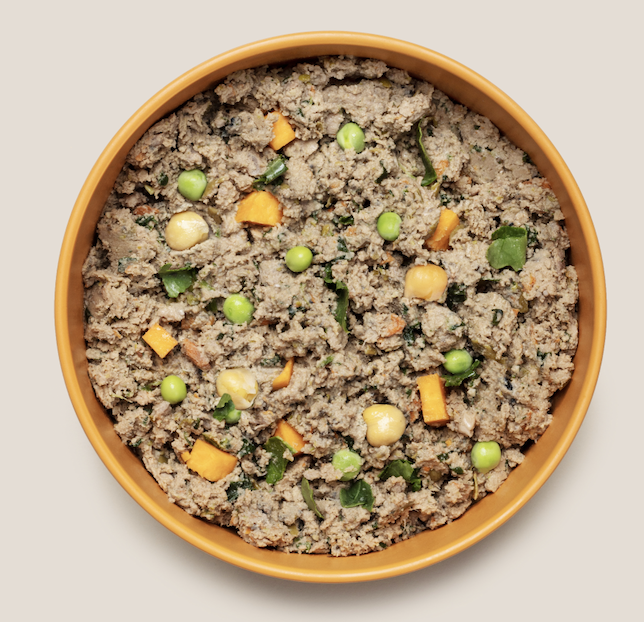
Fresh, pre-portioned food like Ollie’s is a particular fit for poodles. Our recipes are crafted with chefs and veterinary nutritionists, made with human-grade ingredients, and portioned to each dog’s exact calorie needs. These features speak directly to two things poodle owners tend to worry about most: digestive sensitivity, helped by whole, gently cooked ingredients rather than fillers, and (for standards) a feeding routine that fits a bloat-aware, smaller-meal approach.
Start your poodle’s fresh food plan →
FAQs about poodles
Are poodles prone to digestive issues?
Yes. Poodles of all sizes tend toward sensitive stomachs, and because they are sensitive dogs generally, stress and sudden diet changes can trigger upset. A consistent, high-quality, digestible diet and slow food transitions go a long way. Ongoing issues warrant a vet visit.
What is the best food for a standard poodle versus a miniature poodle?
The principles are the same (complete, balanced, quality protein, digestible ingredients), but the portioning and format differ. A miniature poodle does well on calorie-dense food in smaller, more frequent meals suited to a small stomach and fast metabolism. A standard poodle needs large-breed-appropriate nutrition with joint and muscle support, fed in smaller, more frequent meals to be mindful of bloat risk.
How much should I feed my poodle per day?
It depends heavily on size, then life stage and activity, so there is no universal number across a breed that spans four to seventy pounds. Feed to maintain a lean body condition (easily felt ribs, a visible waist, a belly tuck), and let that guide adjustments. Calorie-based plans like Ollie’s take the question out of portions for your dog.
Is fresh food good for poodles?
Yes, and it suits the breed’s sensitive digestion especially well. Fresh food like Ollie’s is made with human-grade, gently cooked ingredients that tend to sit easier than filler-heavy formulas. It also delivers the omega-3s that support a poodle’s signature coat and skin.
Are poodles prone to bloat (GDV)?
Standard poodles are, because they are deep-chested, which is the leading risk factor for bloat [2][3]. Toy and miniature poodles are at much lower risk. All owners should know the warning signs (distended belly, unproductive retching, restlessness) and treat them as an emergency. Smaller, more frequent meals, slowing down fast eaters, and calm mealtimes can help reduce the risk [3].
Do poodles have food allergies?
Some do, though it is individual rather than universal to the breed. Food sensitivities can appear as itchy skin, ear infections, or digestive upset. Pinning down a real food allergy usually means an elimination diet guided by your vet, since symptoms overlap with environmental allergies and other conditions.
Is grain-free food good for poodles?
Not automatically, and it is worth understanding why. In 2018, the FDA began investigating a possible link between certain grain-free diets (specifically those high in peas, lentils, other legumes, and potatoes) and a serious heart condition called dilated cardiomyopathy (DCM) [4]. No causal link has been proven, the science is still unsettled, and the FDA paused routine updates in 2022 pending new evidence [4]. True grain allergies in dogs are uncommon, so most poodles do not need a grain-free diet. The safest path is a complete, balanced diet from a company with strong nutritional expertise, made with your veterinarian’s input.
How do I transition my poodle to fresh food?
Go gradually, especially given poodles’ sensitive stomachs. Over about seven to ten days, mix an increasing proportion of the new food in with the old, starting around 25% new and working up to 100%. If you see digestive upset, slow the pace down. A patient transition is the best way to avoid the stomach trouble this breed is prone to.
What protein source is best for poodles?
There is no single best protein for the breed. What matters is that it is a named, high-quality animal protein (chicken, turkey, beef, lamb, and similar) as the foundation of a complete, balanced diet. If your poodle has a confirmed sensitivity to a particular protein, a novel or limited-ingredient option chosen with your vet can help. Quality and digestibility matter more than the specific meat.
References and further reading
- American Kennel Club. Is the Poodle the Right Dog Breed for You? and Poodle (Standard) breed information. https://www.akc.org/expert-advice/dog-breeds/poodle-right-for-you/ and https://www.akc.org/dog-breeds/poodle-standard/
- Cornell University College of Veterinary Medicine, Riney Canine Health Center. Gastric dilatation-volvulus (GDV) or “bloat.” https://www.vet.cornell.edu/departments-centers-and-institutes/riney-canine-health-center/canine-health-topics/gastric-dilatation-volvulus-gdv-or-bloat
- Purina Institute. Canine Gastric Dilatation-Volvulus (GDV). https://www.purinainstitute.com/centresquare/therapeutic-nutrition/canine-gastric-dilatation-volvulus
- U.S. Food and Drug Administration. FDA Investigation into Potential Link between Certain Diets and Canine Dilated Cardiomyopathy. https://www.fda.gov/animal-veterinary/outbreaks-and-advisories/fda-investigation-potential-link-between-certain-diets-and-canine-dilated-cardiomyopathy
The Ollie blog is devoted to helping pet parents lead healthier lives with their pups. If you want to learn more about our fresh, human-grade food, check out ollie.com. Elizabeth Wieck and Marissa Taffer contributed to this article and it was reviewed by our in-house team of veterinarians and scientists, Catherine Carchedi, MS, DVM; Lindsay Cassibry, MPH, DVM; and Brittany White, PhD.
Disclaimer: This article and the Ollie blog is for informational purposes only and is not a substitute for professional veterinary advice, diagnosis, or treatment. If your dog is showing signs of illness and/or injury, always consult your veterinarian promptly. Every dog is different, and any dietary change should be discussed with your veterinarian. Ollie is not a prescription or therapeutic diet and is not intended to prevent, treat, or manage any medical condition. Always work with your vet to determine the best care plan for your individual pup, especially if they’ve been diagnosed with a health condition.
Tagged As:

The nutrition your dog needs,
the food they want.
Written by:
Elizabeth Wieck is a New York City–based writer and consultant with more than a decade of experience. She loves telling stories that connect with readers—especially when they involve pets.



Enjoying our articles? Subscribe our Newsletters and get new articles directly to your inbox
You might also like

30 August 2026
13 MINS READ
Chihuahua: Pros, Cons, and Diet Guide
The Chihuahua packs huge personality into a tiny frame. Learn about Chihuahua pros and cons, temperament, key health concerns, and expert feeding tips.

25 August 2026
10 MINS READ
Shih Tzu: Pros, Cons, and Best Food Guide
Thinking about bringing home a Shih Tzu? This guide breaks down the breed’s personality, grooming needs, and whether it’s the right fit for your life.

25 August 2026
10 MINS READ
Golden Retriever: Pros, Cons, and Diet Guide
Golden retrievers are famously friendly, but they come with unique needs—from heavy shedding to significant health risks like cancer. Discover the pros, cons, and how the right diet supports your…