[EXCLUSIVE for Ollie Readers!] 70% off + FREE jerky + FREE Puzzle Toy (it’s back!) Try now!
17 July 2026
9 MINS READ
Labrador Retriever: Pros, Cons, and Diet Guide
Known for their loyalty and friendly nature, Labrador Retrievers are one of America’s favorite dog breeds, but they are also biologically hardwired for weight gain. This guide breaks down the pros, cons, and portion-controlled fresh diet needed to keep your Lab healthy and lean.


Reviewed By: Catherine Carchedi, MS, DVM; Lindsay Cassibry, MPH, DVM; and Brittany White, PhD.
Key Takeaways
- Labs are an obesity-prone breed, so portion control isn’t a nice-to-have; it’s the whole ballgame.
- Look for lean, high-quality protein to hold muscle, plus omega-3s (EPA and DHA) to support their famously hardworking joints.
- According to a 2016 study published in Cell Metabolism, around 25% of Labradors carry a genetic mutation (POMC) that keeps them hungry between meals, which is why pre-portioned meals beat free-feeding [6].
- Fresh, calorie-controlled food takes the guesswork out of how much, which matters more for this breed than almost any other.
For decades, the Labrador retriever has ranked among the American Kennel Club’s most popular dog breeds in America, and once you’ve met one, it’s easy to see why [1]. Labs are friendly, trainable, endlessly up for an adventure, and genuinely great with kids.
But that same big-hearted, food-loving nature comes with a health reality every Lab parent should know: Labs have a documented incidence of obesity that is higher than any other breed [2]. So doing right by a Lab means understanding more than just their temperament. It means knowing how their body works, and how to feed it. This guide covers the pros and cons, the breed’s personality, the Labrador retriever health issues worth knowing, and a practical look at what to put in the bowl.
Labrador retriever facts at a glance
Labrador retrievers are medium-to-large dogs with an outsized presence in just about every room they enter. Here’s their breed snapshot:
- Height: roughly 21 to 24 inches at the shoulder
- Weight: about 55 to 80 pounds (females tend toward the lower end, males the higher)
- Coat: short, dense, double coat that repels water, in three classic colors (black, chocolate, and yellow)
- Lifespan: around 11 to 13 years
- Energy level: high (more on that below)
- Origin: Newfoundland, where they worked alongside fishermen retrieving nets and ducks (yes, the name is geographically confusing)
Pros of owning a Labrador retriever
- They’re wonderful with people of all ages. Labs are patient and affectionate, which is a big reason they’ve stayed America’s favorite for decades. They tend to be a great match for households with kids, whether you’re raising a first family dog or teaching older children some responsibility.
- They’re highly trainable. Labs are smart and motivated to please, which makes them quick studies on everything from basic manners to advanced obedience. It’s no accident that so many service, therapy, and working dogs are Labradors.
- They’re up for anything. Hike, swim, road trip, fetch until your arm gives out: a Lab is your enthusiastic plus-one. That versatility makes them one of the easiest breeds to fold into an active life.
Cons of owning a Labrador retriever
- They need space and exercise. Labs are big, energetic dogs that don’t thrive in a sedentary home. They need real daily movement, ideally a fenced yard, regular trips to a dog park, or access to trails or water. If your weekends lean more couch than trail, this may not be your match.
- They shed. A lot. That water-repellent double coat sheds year-round, with heavier shedding in spring and fall. If a fur-free home is non-negotiable, or someone in the house has allergies, factor that in (and budget for a good vacuum).
- Their appetite can get them in trouble. And it’s biological, not behavioral. Labs are wired to eat, which makes them prone to weight gain if you’re not deliberate about portions. The good news: it’s manageable, and we’ll get into exactly how below.
Labrador temperament and personality
Labradors are famously social, even-keeled dogs who genuinely want to be where their people are. They bond deeply with humans and usually get along with other dogs and pets too. Individual Labs have their own preferences (some are bigger people-dogs, some love canine company), but the breed’s baseline is warm, outgoing, and a little goofy in the best way.
That eager-to-please nature is what makes them so trainable, but it comes with a catch: Labs need a job. A bored, under-exercised Lab will find their own entertainment. Channel that energy into training, play, swimming, or canine sports, and you’ll have a dog who’s both happy and easy to live with.
Labrador health: lifespan and common issues
Labrador retrievers typically live around 11 to 13 years, and they’re generally robust dogs, but the breed carries a few well-documented Labrador retriever health issues worth watching for.
- Joint conditions. Labs are one of the breeds most associated with hip dysplasia, an inherited orthopedic condition where the hip joint develops improperly and can lead to arthritis over time. According to experts at Cornell University College of Veterinary Medicine, hip dysplasia is a genetic condition that can be modified by environmental influences such as nutrition and growth rate, which is part of why keeping a Lab lean matters so much [4]. Elbow dysplasia, cranial cruciate ligament (CCL) tears, and osteoarthritis are also relatively common in the breed.
- Obesity. This is the headline health issue for Labs, and it amplifies everything else. Carrying extra weight puts added strain on their joints, worsens conditions like hip dysplasia and arthritis, and increases the risk of heart disease and a shorter lifespan [5]. For Labs specifically, weight management is preventive medicine.
- Other issues. Responsible breeders test for eye conditions like progressive retinal atrophy (PRA) and for exercise-induced collapse (EIC), both of which have genetic tests available. Like other deep-chested breeds, Labs can also be at some risk of bloat. Your vet can help you understand which screenings make sense for your dog.
Labrador retriever nutritional needs
The single most important thing to understand about feeding a Lab is that their hunger is partly hardwired.
A 2016 study published in Cell Metabolism found that around 25% of Labradors carry a mutation in a gene called POMC, which plays a critical role in hunger and energy use, and researchers have shown it is linked to increased interest in food and a higher risk of obesity [3][6]. A 2024 University of Cambridge study found that dogs with the mutation are hungrier between meals, and also burn around 25% less energy at rest than dogs without it, a combination that makes weight gain genuinely easy for this breed [3].
What that means for the bowl: a healthy Lab diet leads with quality protein to maintain lean muscle, stays moderate in calories to prevent creep, and includes omega-3 fatty acids (especially EPA and DHA) to support their hardworking joints and skin. The precision matters more than the philosophy here. Because a Lab’s body is working against you on portion size, the value of measured, calorie-aware meals is hard to overstate.
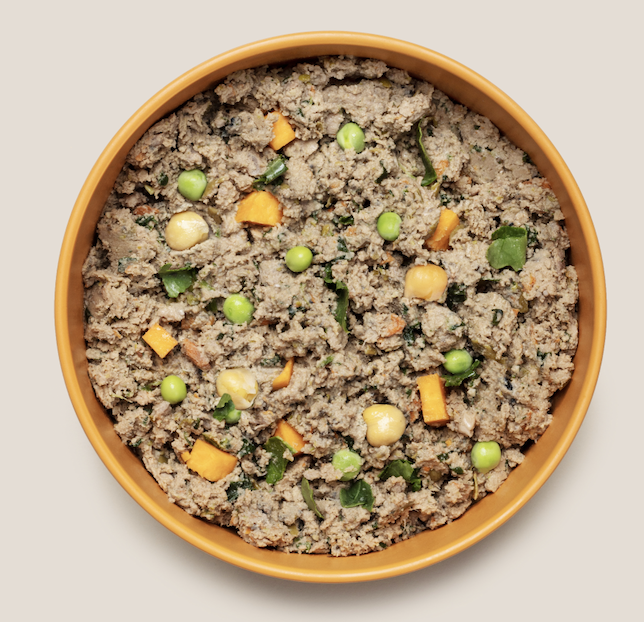
Few breeds benefit from measured feeding like a Lab, and that’s exactly fresh food’s strength. Ollie’s recipes are crafted with chefs and veterinary nutritionists, built around human-grade proteins, and—the part Labs need most—portioned to your dog’s specific weight, spay/neuter status, and activity level. You’re not eyeballing a scoop and hoping for the best.
How much should I feed my Labrador retriever?
There’s no single number for how much to feed a Lab, because the right amount depends on your dog’s ideal weight, age, and how active they are, not just what the back of a bag suggests. The goal is to feed to a healthy body condition (you should be able to feel ribs without pressing, and see a visible waist from above), and to adjust as your dog grows, slows, or changes activity.
For a breed this prone to overeating, that’s exactly why pre-portioned meals are such a relief. Rather than guessing, Ollie calculates your Lab’s daily calories and ships meals already measured to match, which removes the part of feeding that many owners get wrong.
What is the best food for Labs?
The best food for Labs leads with a named, high-quality protein and keeps calories in check. Look for lean proteins to support muscle without excess fat, omega-3 sources (like fish) for joint and coat health, and recipes free of cheap fillers that pad calories without nutrition.
What to look for:
- A real, named protein as the first ingredient
- Omega-3 fatty acids (EPA and DHA) for joints, coat, and skin
- Calorie-controlled, complete-and-balanced formulas
- Whole-food ingredients over fillers and by-products meals
What to avoid:
- Free-feeding (leaving food out all day), which is risky for a breed this food-motivated
- Calorie-dense table scraps and frequent high-fat treats
- Foods that are toxic to all dogs, including chocolate, grapes and raisins, onions and garlic, and anything with xylitol
As for allergies, Labs can develop food sensitivities (often to specific proteins) as well as environmental allergies that show up as itchy skin or ear issues. If you suspect a sensitivity, your vet is the right partner for an elimination diet rather than guesswork.
Is fresh dog food good for Labradors?
Yes, fresh dog food is an excellent fit for Labradors, and arguably more so than for the average breed. The reason ties straight back to their biology: fresh food is portion-precise and calorie-transparent, which directly addresses the Lab’s tendency toward weight gain. Instead of free-feeding kibble, you’re serving meals measured to your dog’s exact needs.
Fresh food like Ollie’s also tends to be more nutrient-dense and made with recognizable, human-grade ingredients, so your Lab gets quality protein and joint-supporting nutrients without a lot of empty calories. For a breed where every calorie counts, pairing quality nutrition with that level of control is a genuine advantage.
FAQs about Labrador retrievers
Are Labrador retrievers prone to obesity?
Yes. Labs have the highest documented obesity rate of any dog breed, driven in part by a POMC gene mutation found in about a quarter of Labradors that increases hunger and lowers resting energy use, according to a 2024 study from the University of Cambridge [2][3]. Strict portion control and regular exercise are essential.
What is the best protein for Labs?
Lean, high-quality, named proteins are ideal because they support muscle maintenance without excess fat or calories. Proteins that also deliver omega-3s, like fish, offer a bonus for joint and coat health. The most important factors are quality and portion size.
How much should I feed my Lab by weight?
There’s no universal cup count, because the right amount depends on your dog’s ideal weight, age, and activity level. The aim is to feed a healthy body condition and adjust over time. Pre-portioned fresh food like Ollie’s calculates and measures your Lab’s calories for you.
Do Labs have food allergies or sensitivities?
Some do. Labs can develop sensitivities to certain proteins as well as environmental allergies that show up as skin or ear irritation. If you suspect a food issue, work with your vet on a proper elimination diet.
What foods should Labs avoid?
Beyond foods toxic to all dogs (chocolate, grapes and raisins, onions, garlic, and xylitol), Labs should especially avoid free-feeding, calorie-heavy table scraps, and frequent fatty treats, all of which stack the deck toward weight gain in this breed.
How often should a Lab eat?
Most adult Labradors do well with two measured meals a day. Puppies need more frequent feeding to support growth. Splitting food into set meals (rather than leaving it out) helps manage both hunger and weight.
Can Labs eat fresh dog food?
Absolutely. Fresh food like Ollie’s is a great choice for Labradors thanks to its portion precision, calorie transparency, and high-quality ingredients, all of which directly support the breed’s biggest dietary challenge: staying at a healthy weight.
References and further reading
- American Kennel Club. Most Popular Dog Breeds. https://www.akc.org/most-popular-breeds/
- VCA Animal Hospitals. Pro-opiomelanocortin (POMC) Gene Mutation. https://vcahospitals.com/know-your-pet/proopiomelanocortin-pomc-gene-mutation
- University of Cambridge. Genetic mutation in a quarter of all Labradors hard-wires them for obesity. https://www.cam.ac.uk/research/news/genetic-mutation-in-a-quarter-of-all-labradors-hard-wires-them-for-obesity
- Cornell University College of Veterinary Medicine, Riney Canine Health Center. Canine Hip Dysplasia (CHD). https://www.vet.cornell.edu/departments-centers-and-institutes/riney-canine-health-center/canine-health-topics/canine-hip-dysplasia-chd
- Welleby Veterinary Hospital. Labrador Retriever Health Issues: 5 Health Concerns to Look Out For. https://wellebyvet.com/blog/labrador-retriever-health-issues/
- Raffan E, et al. A Deletion in the Canine POMC Gene Is Associated with Weight and Appetite in Obesity-Prone Labrador Retriever Dogs. Cell Metabolism, 2016, https://pmc.ncbi.nlm.nih.gov/articles/PMC4873617/
The Ollie blog is devoted to helping pet parents lead healthier lives with their pups. If you want to learn more about our fresh, human-grade food, check out ollie.com.
Disclaimer: This article and the Ollie blog is for informational purposes only and is not a substitute for professional veterinary advice, diagnosis, or treatment. If your dog is showing signs of illness and/or injury, always consult your veterinarian promptly. Every dog is different, and any dietary change should be discussed with your veterinarian. Ollie is not a prescription or therapeutic diet and is not intended to prevent, treat, or manage any medical condition. Always work with your vet to determine the best care plan for your individual pup, especially if they’ve been diagnosed with a health condition.
Tagged As:

The nutrition your dog needs,
the food they want.
Written by:
Elizabeth Wieck is a New York City–based writer and consultant with more than a decade of experience. She loves telling stories that connect with readers—especially when they involve pets.




Enjoying our articles? Subscribe our Newsletters and get new articles directly to your inbox
You might also like

30 August 2026
13 MINS READ
Chihuahua: Pros, Cons, and Diet Guide
The Chihuahua packs huge personality into a tiny frame. Learn about Chihuahua pros and cons, temperament, key health concerns, and expert feeding tips.

25 August 2026
10 MINS READ
Shih Tzu: Pros, Cons, and Best Food Guide
Thinking about bringing home a Shih Tzu? This guide breaks down the breed’s personality, grooming needs, and whether it’s the right fit for your life.

25 August 2026
10 MINS READ
Golden Retriever: Pros, Cons, and Diet Guide
Golden retrievers are famously friendly, but they come with unique needs—from heavy shedding to significant health risks like cancer. Discover the pros, cons, and how the right diet supports your…