[EXCLUSIVE for Ollie Readers!] 70% off + FREE jerky + FREE Puzzle Toy (it’s back!) Try now!
24 July 2026
12 MINS READ
Great Dane: Complete Breed and Health Guide
Reviewed by: Catherine Carchedi, MS, DVM; Lindsay Cassibry, MPH, DVM; and Brittany White, PhD. Few dogs make an entrance like a Great Dane. Bred in Germany as boarhounds and later refined into the gentle estate companions we know today, these dogs pair an imposing, head-turning size with one of the sweetest, most people-loving temperaments in […]

Reviewed by: Catherine Carchedi, MS, DVM; Lindsay Cassibry, MPH, DVM; and Brittany White, PhD.
What is the right dog food for Great Danes?
- Great Danes need a complete, balanced diet formulated for large and giant breeds, with controlled energy and calcium, especially as puppies, when growing too fast is exactly what you want to avoid.
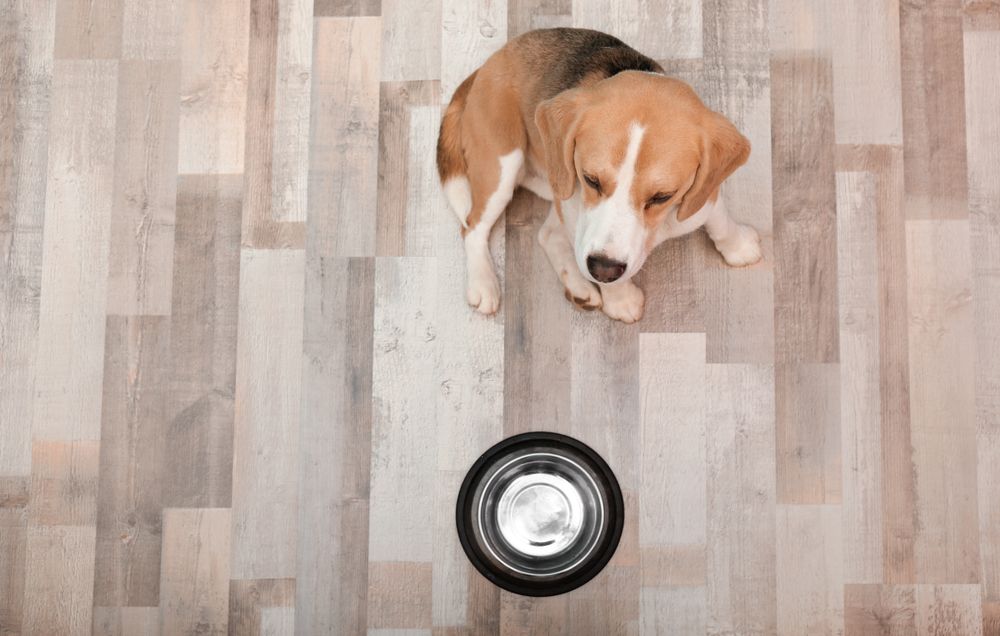
- Feed two to three measured meals a day rather than one big one, and not from a raised bowl. Smaller, floor-level meals are part of how you lower the risk of bloat, the breed’s most serious health threat.
- Skip the calcium supplements and the “grow big fast” mindset. For a giant-breed puppy, slow, steady growth on a giant-breed formula protects the joints far better than extra calories or minerals.
- Look for quality protein and omega-3 fatty acids (EPA and DHA) to support muscle, joints, and a healthy heart in a breed prone to cardiac and orthopedic issues.
- No food can prevent bloat or cure a genetic condition, but the right diet, fed the right way, is one of the most direct levers you have on a Great Dane’s health and longevity.
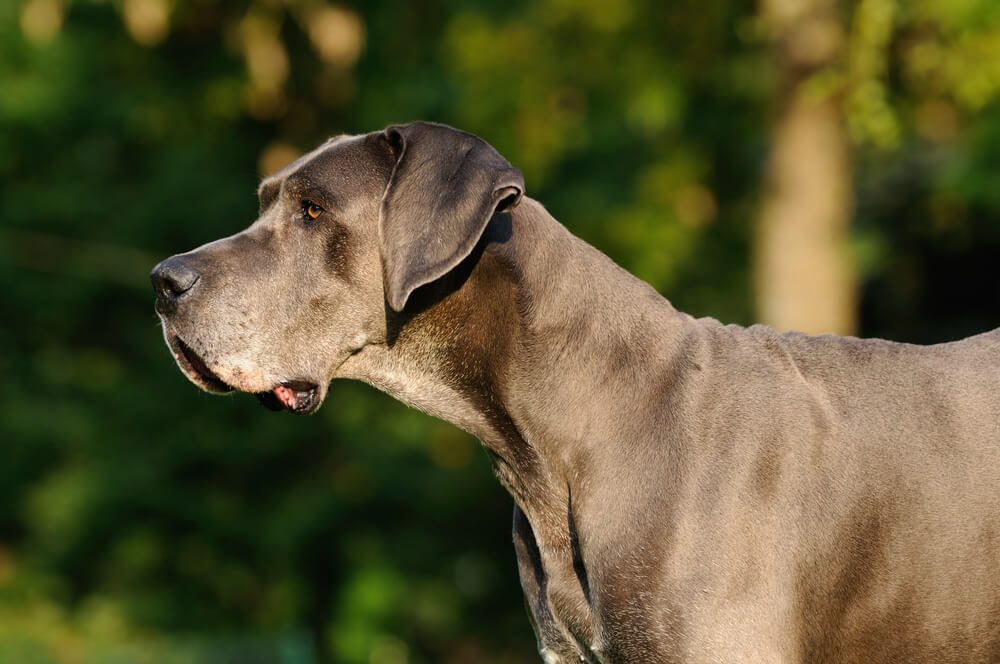
Few dogs make an entrance like a Great Dane. Bred in Germany as boarhounds and later refined into the gentle estate companions we know today, these dogs pair an imposing, head-turning size with one of the sweetest, most people-loving temperaments in the dog world [1][2]. This guide covers the Great Dane’s pros and cons, what life with this gentle giant is actually like, the health issues every owner should understand, and how to feed a breed whose enormous frame makes nutrition a top priority.
This is also where Ollie fits in. Great Danes are one of the shortest-lived breeds, which makes proactive care essential. Diet is a big part of that: feeding the right food, in the right portions, at the right frequency supports a healthy growth rate in puppies, a lean and joint-friendly weight in adults, and the kind of calm mealtime routine that helps lower bloat risk. Ollie’s fresh recipes are crafted with chefs and veterinary nutritionists, portioned precisely to your dog, and built to make those daily choices easier, more of a health investment than just a food upgrade.
See Ollie’s fresh meal plans for Great Danes →
Great Danes at a glance
- Size: One of the tallest breeds in the world. Males stand about 30 to 32 inches at the shoulder and weigh 140 to 175 pounds; females run about 28 to 30 inches and 110 to 140 pounds [1].
- Lifespan: Roughly 7 to 10 years, short even for a giant breed, and worth going in with eyes open.
- Coat: Short, smooth, and low-maintenance, in colors from fawn and brindle to black, blue, harlequin, mantle, and merle. They’re light-to-moderate shedders, with two heavier seasonal sheds.
- Group: AKC Working group, recognized in 1887, and the national dog of Germany, where the breed is called the Deutsche Dogge [1][2].
- Temperament: Gentle, affectionate, and people-oriented, the original “gentle giant,” with a calm, even disposition.
- Energy: Moderate. Daily walks and room to stretch their legs are plenty, they’re not endurance athletes.
- Trainability: Smart and eager to please, which matters enormously in a dog this size. Early training and socialization are non-negotiable.
- Best for: Families and individuals with the space, budget, and time for a giant companion, who want devotion and presence over a low-effort pet.
Pros of owning a Great Dane
- The ultimate gentle giant. Few breeds combine this much size with this much sweetness.
- Wonderful family dogs. Affectionate, patient, and devoted, with the right supervision around small kids.
- Surprisingly adaptable. They’re calm indoors and don’t need endless exercise, so even apartment life can work with enough space and walks.
- Low grooming needs. That short coat doesn’t ask for much beyond regular brushing and the usual nail, ear, and dental care.
- Smart and trainable. They learn quickly and aim to please.
- An unmistakable presence. They turn heads and make dignified, deeply loyal companions.
Cons of owning a Great Dane
- A short lifespan. This is the hard one. Seven to 10 years is brief, and it’s the trade-off that comes with the size [1].
- Serious health risks. The breed is prone to bloat, heart disease, orthopedic concerns, and cancer. More on all of these below.
- They’re expensive. Everything scales with size: food, medication, boarding, and vet care all cost more for a giant breed.
- Separation anxiety is common. And can be harder to manage in a dog this large.
- They need space and logistics. A Dane’s size shapes your home, your car, and your daily routine.
Great Dane temperament and personality
For all their size, Great Danes are famously gentle. The “gentle giant” nickname fits: these are affectionate, even-tempered dogs that want nothing more than to be part of the family, whether that means a long walk or a movie night with a giant head in your lap (just keep a towel handy for the drool) [1].
They’re playful and notably good with children, though their size means kids need to be taught to be gentle, and young children should always be supervised around them. Danes tend to be sociable with other dogs too, especially when introduced early. They’re intelligent and eager to please, which makes training both a pleasure and a necessity. A 150-pound dog that pulls on the leash or jumps on guests isn’t a nuisance so much as a hazard, so early, positive, reward-based training is essential.
One trait worth planning for: Great Danes are prone to separation anxiety, and in a dog this large, the destructive fallout can be serious. Crate training and gradual alone-time practice from day one help enormously. They aren’t big barkers, but an under-stimulated Dane can develop a demanding bark, so daily exercise and attention matter.
Great Dane health issues
There’s no way around it: Great Danes are prone to a number of serious health conditions, and their average lifespan of about 7 to 10 years is among the shortest of any breed [1]. None of this should scare you off, but going in informed helps you partner with your vet, choose a responsible breeder, and act fast when it counts. The Great Dane Club of America publishes recommended health screenings, so ask any breeder which tests a puppy’s parents have had [2].
- Bloat (GDV). The single biggest health threat to the breed, serious enough that we’re diving more into it below. Great Danes have the highest risk of any breed [3][4].
- Dilated cardiomyopathy (DCM). Danes are especially prone to this heart-muscle disease, in which the heart enlarges and weakens. It can run in families, so cardiac screening (an echocardiogram and/or ECG) starting around age one is widely recommended [7].
- Hip and elbow dysplasia. Like most giant breeds, Danes can develop these joint malformations. Growing too fast as a puppy raises the risk, which is why diet is extra important for Great Danes during the puppy phase [5][6].
- Wobbler syndrome. A condition where the neck vertebrae compress the spinal cord, producing a wobbly, unsteady gait. It’s seen more often in large, long-necked breeds like the Dane [2].
- Bone cancer (osteosarcoma) and lymphoma. Giant breeds carry a higher risk of certain cancers, and osteosarcoma, which often shows up first as limping, is the most common bone tumor in dogs [2].
- Hypothyroidism. An underactive thyroid is fairly common in the breed and very treatable once diagnosed with a simple blood test [2].
Understanding bloat (GDV) in Great Danes
If you take one thing from this guide, make it this. Bloat, known clinically as gastric dilatation-volvulus or GDV, is the most serious health risk Great Danes face, and they have the highest incidence of any breed [3]. It happens when the stomach fills with gas and then twists on itself, cutting off blood flow. It is a true emergency: without immediate surgery, it can be fatal within hours.
Know the warning signs. Call an emergency vet right away if you see:
- A swollen, distended belly
- Unproductive retching or dry heaving (trying to vomit with nothing coming up)
- Restlessness, pacing, or obvious discomfort
- Excessive drooling
- Weakness or collapse
When in doubt, go in. With GDV, minutes matter.
Can food help eliminate the risk of GDV? We don’t fully understand why bloat happens, and no routine eliminates the risk entirely. But research published in 2000 from the Journal of the American Veterinary Medical Association has identified feeding practices associated with higher or lower risk, and they’re worth building into your daily routine [4]:
- Feed two to three smaller meals a day instead of one large one. A big single meal puts more volume in the stomach at once, which raises risk.
- Feed from floor level, not a raised bowl. This one surprises people. Older advice recommended elevated bowls, but the research actually links raised feeders to increased bloat risk in giant breeds [3][4].
- Slow down a fast eater. Gulping is a risk factor; a slow-feeder bowl or a puzzle feeder can help.
- Keep mealtimes calm. Stress and excitement around eating are associated with higher risk, so a quiet feeding spot helps.
Many owners also limit vigorous exercise right around mealtimes as a precaution. The evidence there is weaker than for the factors above, but it’s a low-cost habit worth incorporating.
For a high-risk breed like the Dane, many vets recommend a preventive surgery called a gastropexy, often done at the same time as spay or neuter, that tacks the stomach to the body wall so it can’t twist. It doesn’t stop the stomach from filling with gas, but it dramatically reduces the risk of the dangerous twisting.
Great Dane nutritional needs: giant-breed requirements
Feeding a Great Dane well comes down to feeding for their size and growth rate. The foundation is a complete, balanced diet formulated for large or giant breeds, and the single most important idea is controlled, steady growth, especially in puppyhood.
Here’s why. Giant-breed puppies grow at a staggering rate, and pushing that growth even faster with too many calories or too much calcium is one of the main drivers of developmental orthopedic disease, the hip, elbow, and cartilage problems Danes are already prone to, as published in an article from dvm360 in 2013 [6].
Two myths are worth clearing up: it is not high protein that causes these issues (studies in Great Dane puppies specifically have not found protein to be the culprit), and bigger-faster is not better. The actual risks are excess energy and excess calcium, so giant-breed puppies need a giant-breed growth formula with controlled calories and tightly managed calcium, and not calcium supplements on top of a balanced diet [5][6]. The ratio of calcium to phosphorus is also important, and must be at the right balance to ensure bones mineralize properly.
For adults, the priorities shift to maintaining a lean body weight (extra pounds tax the joints and heart), quality protein for muscle, and omega-3 fatty acids (EPA and DHA) that support joints and cardiovascular health [5]. Across every life stage, a complete and balanced diet carrying an AAFCO statement for the right life stage is the baseline.
Few breeds benefit from precise feeding the way a giant one does, and that’s fresh food’s strong suit. Ollie’s fresh recipes are crafted with chefs and veterinary nutritionists to be complete and balanced and, just as importantly here, portioned precisely to your dog’s spay/neuter status, weight, and growth or maintenance target, so the calorie control giant breeds depend on is measured rather than guessed.
Build your Great Dane’s perfectly portioned plan →
How much should I feed a Great Dane?
There’s no single number, because the right amount depends on your dog’s spay/neuter status, weight, activity level, and body condition. For a giant breed, those numbers are large and change a lot over the first two years.
Here’s a general framework:
- Puppies eat the most relative to their stage, but the goal is steady growth, not maximum growth. Most Dane puppies do well on three meals a day, transitioning toward two as they mature, always on a giant-breed formula that controls calories and calcium [5][6].
- Adults typically eat two measured meals a day, and feeding two to three smaller meals rather than one large one isn’t only about calories: it’s part of bloat-aware feeding for this breed [3]. Yes, a full-grown Dane eats a lot, but more is not better. Keeping your dog lean is one of the best things you can do for their joints, heart, and lifespan.
Because giant breeds are easy to over- or under-feed at different stages, your vet is the best partner for setting a target weight and intake. One advantage of a fresh plan like Ollie is that meals arrive pre-portioned to your dog’s profile, a meaningful head start on the calorie control this breed depends on.
What is the best food for Great Danes?
So what should actually go in the bowl? For most Great Danes, the best food checks these boxes:
- Complete and balanced for their life stage, with a giant-breed puppy formula through about age two.
- Controlled calories and calcium during growth, to support steady development and protect the joints [5][6].
- Quality protein for lean muscle, plus omega-3 fatty acids for joint and heart support [5].
- Portions sized precisely to your individual dog, since calorie control is everything for a giant breed.
- A format and routine that supports bloat-aware feeding: smaller, calmer, floor-level meals [3].
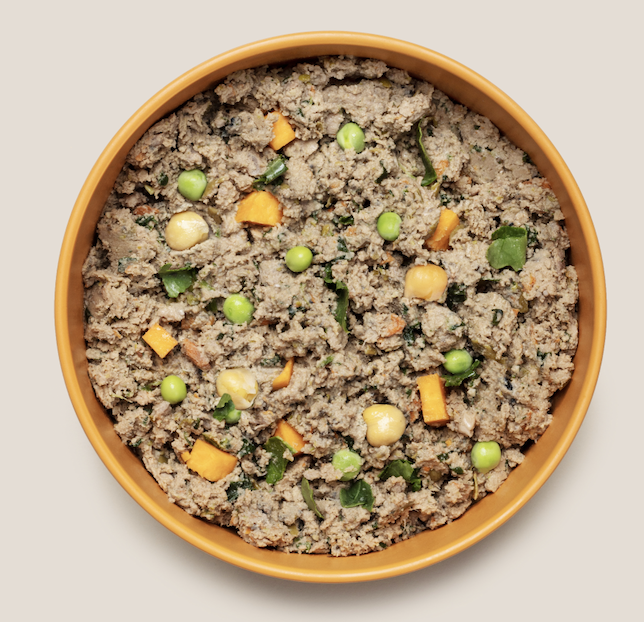
Fresh, gently cooked food like Ollie’s was built with these needs in mind: recipes crafted with chefs and veterinary nutritionists, clean ingredient lists, and portions tailored to your dog’s exact size and life stage. For a breed where diet can play a big role in influencing health and longevity, that precision makes all the difference.
Start your Great Dane’s fresh food plan →
FAQs about Great Danes
Q: Do Great Danes get bloat?
A: Yes, and it’s the breed’s most serious health risk. Great Danes have the highest incidence of bloat (GDV) of any breed, and it can be fatal without emergency surgery [3][4]. Knowing the warning signs and following bloat-aware feeding practices are some of the most important parts of owning one.
Q: How long do Great Danes live?
A: About 7 to 10 years, which is among the shortest lifespans of any breed [1]. It’s the hard trade-off that comes with their size, and it’s a big reason proactive health care and good nutrition matter so much for this breed.
Q: What is the best food for a Great Dane?
A: A complete, balanced diet formulated for large or giant breeds, with controlled calories and calcium during growth, quality protein, and omega-3 fatty acids for joints and heart [5]. Fresh, gently cooked food like Ollie’s, portioned to your individual dog, fits the bill.
Q: Is fresh food good for Great Danes?
A: Yes. Made with human-grade ingredients, quality protein, and the omega-3s that support a Great Dane’s hardworking joints and heart, fresh food like Ollie’s is portioned precisely to the lean, controlled growth this giant breed depends on.
Q: Do Great Danes need large-breed-specific food?
A: Yes, especially as puppies. Giant-breed puppies need carefully controlled calories and calcium to grow at a steady, healthy rate, since growing too fast raises the risk of joint and bone problems [5][6]. A giant-breed formula is built for exactly that.
Q: What is GDV, and how can diet help prevent it?
A: GDV (gastric dilatation-volvulus) is bloat: the stomach fills with gas and twists, which is life-threatening without immediate surgery. No food prevents it, but feeding practices can lower the risk, including smaller, more frequent meals, feeding from floor level rather than a raised bowl, and slowing down fast eaters [3][4]. Many owners of high-risk dogs also discuss a preventive gastropexy with their vet.
Q: How many times a day should a Great Dane eat?
A: Puppies usually eat three meals a day, and adults do best on two to three smaller meals rather than one large one [3]. Spreading food across the day reduces the volume in the stomach at any one time, which is part of bloat-aware feeding for the breed.
Q: Are Great Danes prone to joint problems?
A: Yes. Like most giant breeds, Danes can develop hip and elbow dysplasia, and the risk goes up when a puppy grows too quickly [5][6]. Controlled growth on a giant-breed formula and a lean body weight throughout life are two of the best ways to protect their joints.
References and further reading
- American Kennel Club. Great Dane Dog Breed Information. https://www.akc.org/dog-breeds/great-dane/
- Great Dane Club of America. https://gdca.org/
- Purina Institute. Canine Gastric Dilatation-Volvulus (GDV). https://www.purinainstitute.com/centresquare/therapeutic-nutrition/canine-gastric-dilatation-volvulus
- Glickman LT, Glickman NW, Schellenberg DB, Raghavan M, Lee T. Non-dietary risk factors for gastric dilatation-volvulus in large and giant breed dogs. Journal of the American Veterinary Medical Association. 2000;217(10):1492-1499. https://doi.org/10.2460/javma.2000.217.1492
- VCA Animal Hospitals. Nutritional Considerations for Large and Giant Breed Dogs. https://vcahospitals.com/know-your-pet/nutritional-considerations-for-large-and-giant-breed-dogs
- dvm360. Developmental orthopedic disease in large-breed puppies. https://www.dvm360.com/view/developmental-orthopedic-disease-large-breed-puppies
- North Carolina State University College of Veterinary Medicine. Great Dane Dilated Cardiomyopathy. https://hospital.cvm.ncsu.edu/services/small-animals/genetics/great-dane-dilated-cardiomyopathy/
The Ollie blog is devoted to helping pet parents lead healthier lives with their pups. If you want to learn more about our fresh, human-grade food, check out ollie.com. Elizabeth Wieck contributed to this article and it was reviewed by our in-house team of veterinarians and scientists, Catherine Carchedi, MS, DVM; Lindsay Cassibry, MPH, DVM; and Brittany White, PhD.
Disclaimer: This article and the Ollie blog is for informational purposes only and is not a substitute for professional veterinary advice, diagnosis, or treatment. If your dog is showing signs of illness and/or injury, always consult your veterinarian promptly. Every dog is different, and any dietary change should be discussed with your veterinarian. Ollie is not a prescription or therapeutic diet and is not intended to prevent, treat, or manage any medical condition. Always work with your vet to determine the best care plan for your individual pup, especially if they’ve been diagnosed with a health condition.
Tagged As:
The nutrition your dog needs,
the food they want.
Written by:
Marissa Taffer is a consultant, writer and strategist based in Philadelphia. She lives and works with her rescue dog Charlie, a certified therapy dog.


Enjoying our articles? Subscribe our Newsletters and get new articles directly to your inbox
You might also like
30 August 2026
13 MINS READ
Chihuahua: Pros, Cons, and Diet Guide
The Chihuahua packs huge personality into a tiny frame. Learn about Chihuahua pros and cons, temperament, key health concerns, and expert feeding tips.
25 August 2026
10 MINS READ
Shih Tzu: Pros, Cons, and Best Food Guide
Thinking about bringing home a Shih Tzu? This guide breaks down the breed’s personality, grooming needs, and whether it’s the right fit for your life.
25 August 2026
10 MINS READ
Golden Retriever: Pros, Cons, and Diet Guide
Golden retrievers are famously friendly, but they come with unique needs—from heavy shedding to significant health risks like cancer. Discover the pros, cons, and how the right diet supports your…