[EXCLUSIVE for Ollie Readers!] 70% off + FREE jerky + FREE Puzzle Toy (it’s back!) Try now!

Reviewed by: Catherine Carchedi, MS, DVM; Lindsay Cassibry, MPH, DVM; and Brittany White, PhD.
What is the best food for Pomeranians?
- A Pomeranian’s famous double coat mirrors their nutrition, so their diet should be filled with quality protein, plus omega-3 fatty acids (EPA and DHA) to support healthy skin and a full, shiny coat.
- Because Poms are tiny, calorie needs are small, and it takes only a few extra bites to tip a five-pound dog into overweight. Measure portions by calories sized to your individual dog rather than by the scoop, and feed young puppies more frequently to keep blood sugar steady.
- Small jaws mean crowded teeth and a strong tendency toward dental disease, so soft, easy-to-eat fresh food is kinder to a little mouth (though no food replaces brushing and professional cleanings).
- No food cures the breed-specific conditions Poms are prone to, like alopecia X (a cosmetic coat condition) or a luxating patella, but keeping your Pomeranian lean and well-nourished supports their joints, coat, and day-to-day comfort.
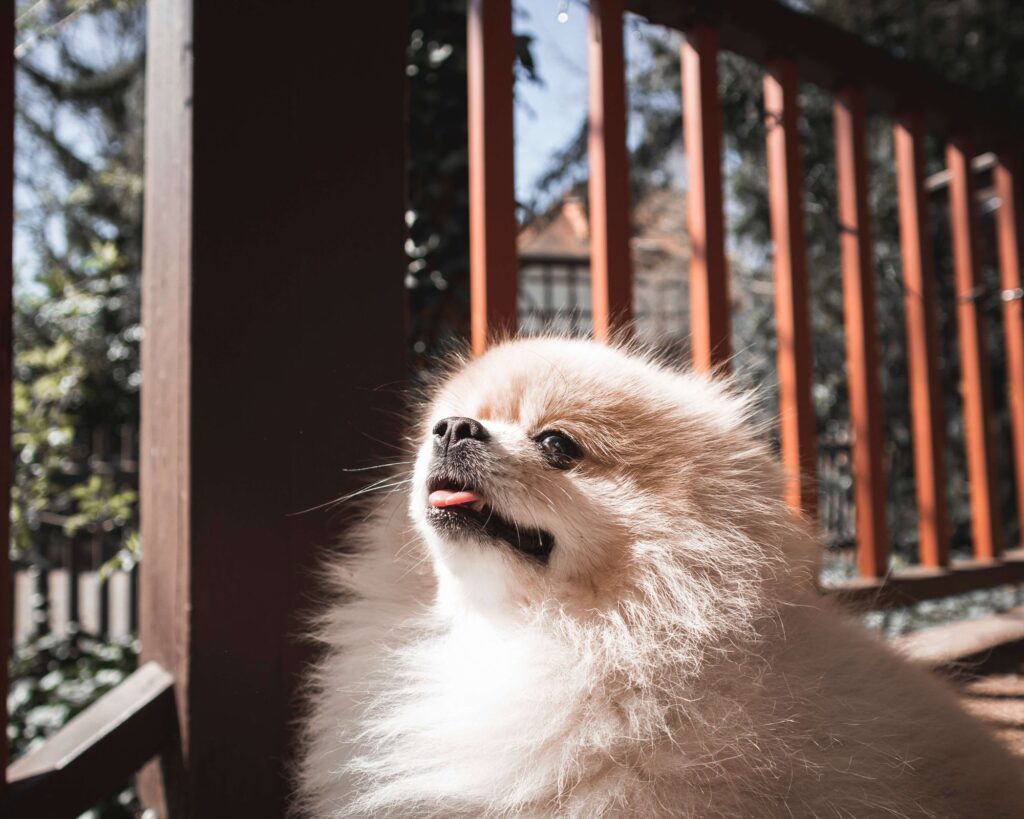
Few dogs carry themselves with as much confidence per pound as the Pomeranian. Descended from hardy sled dogs and bred down into a fluffy three-to-seven-pound companion, the Pom is bold, bright, and thoroughly convinced it’s much bigger than it is, all under a spectacular double coat [1]. This guide covers the Pomeranian’s pros and cons, what that outsized personality is like to live with, the health issues worth knowing about, and how to feed a breed whose coat and small size make nutrition matter more than most.
This is also where Ollie fits in. A Pomeranian’s coat is essentially built from what they eat: the protein and omega-3 fatty acids in the bowl are the same raw materials that grow soft, full fur and keep skin healthy. So for a breed defined by its coat, food is one of the most direct ways to influence how a Pom looks and feels. Ollie’s fresh recipes are crafted with chefs and veterinary nutritionists, made without fillers, and portioned precisely for a small dog like a Pomeranian.
See Ollie’s fresh meal plans for Pomeranians →
Pomeranian quick facts
- Size: A true toy breed, typically 3 to 7 pounds and about 6 to 7 inches tall at the shoulder [1].
- Lifespan: Roughly 12 to 16 years, long-lived even by small-dog standards.
- Coat: A thick double coat, with a soft undercoat beneath longer guard hairs. Poms come in more colors than almost any breed, most commonly orange, red, black, and cream.
- Group: AKC Toy group, recognized in 1888, and a long-running fixture on the most-popular-breeds list.
- Temperament: Bold, curious, and devoted to their people, with a watchdog’s alertness and a stubborn streak.
- Energy: Higher than you’d expect for the size, though a couple of short walks plus indoor play is usually enough.
- Barking: Vocal and quick to sound the alarm. Early training keeps the volume manageable.
- Best for: Apartments and houses alike, plus singles, couples, retirees, and families with older, gentle kids who want a huge personality in a tiny, attention-loving package.
Pomeranian appearance: the fluffy fox dog
That foxy face is no accident. The Pomeranian is a spitz breed, descended from larger German Spitz sled and working dogs, and named for the Pomerania region of what is now Poland and Germany [1]. You can still see the heritage in the wedge-shaped head, the small erect ears, the alert expression, and the plumed tail that curls up over the back.
Poms wear a double coat: a dense, soft undercoat for insulation and a longer, coarser layer of guard hairs that gives them that unmistakable pom-pom silhouette. It also comes in an enormous range of colors, from the familiar orange and red to black, cream, sable, and beyond.
Here’s a piece of history that surprises people: Poms used to be much bigger. Early Pomeranians were sledding and herding dogs weighing up to 30 pounds. The breed was bred down to its modern toy size largely thanks to Queen Victoria, who fell for a small Pom named Marco in the late 1800s and set off a trend for tinier and tinier dogs [2]. The fluffy lapdog we know today is, in effect, a royal redesign of a working spitz.
Pros of owning a Pomeranian
- Big personality, small footprint. You get bold, funny, larger-than-life companionship in a dog that fits in a tote bag.
- Smart and trainable. Poms learn quickly and love showing off, which makes tricks and basic obedience a pleasure when you start early.
- Apartment-friendly. Their size and modest space needs mean they thrive in a city high-rise, a suburban home, or anywhere in between.
- Easy to travel with. At just a few pounds, a Pomeranian is one of the simplest breeds to bring along (just confirm airline and hotel rules first).
- Long-lived. With good care, many Poms stay bright and playful well into their teens.
- Alert little watchdogs. They’ll always let you know someone’s at the door, whether or not you asked.
Cons of owning a Pomeranian
- That coat is a commitment. A double coat needs brushing a few times a week at minimum, plus full professional groom sessions. The upkeep takes time and money.
- They don’t know they’re small. Bold to the point of brash, an under-socialized Pomeranian may pick fights with dogs many times its size, so early socialization matters.
- They can be barky. That watchdog instinct is a feature and a bug; without training, the alerting can become a habit.
- Housetraining takes patience. Like many toy breeds, Poms have tiny bladders and can be slow to house-train. Consistency and frequent breaks are key.
- They’re not ideal for young kids. At just a few pounds, Pomeranians are easily injured by the rough-and-tumble of small children, making them a better fit for homes with older or gentler kids.
- They’re prone to specific health issues. More on those below, several of which call for proactive care.
Pomeranian temperament and personality
True to its spitz roots, the Pomeranian is spunky, bold, and adventurous, with far more swagger than its size suggests. This is a dog that struts. Poms tend to bond closely with their one or two favorite people and can be a touch aloof with strangers, which is exactly what makes them such enthusiastic little watchdogs [1].
They’re bright and quick to learn, but that intelligence comes bundled with a stubborn streak, so reward-based training built on praise, food, and games works far better than repetition or force [2]. Expect a playful, curious companion that’s more “spirited sidekick” than sleepy lapdog. Early, positive socialization is the single best investment you can make in a Pom, smoothing out the barking and the bravado before they harden into habits.
Common Pomeranian health issues
Pomeranians are long-lived and generally hardy, but like any purebred, they carry some breed-specific predispositions. Knowing them helps you partner with your vet on prevention and catch problems early. The American Pomeranian Club publishes recommended health screenings, so if you’re working with a breeder, be sure to ask which tests your puppy’s parents have had.
- Luxating patella. A slipping kneecap is one of the most common orthopedic issues in toy breeds, and Pomeranians have among the highest rates of any breed [4]. It ranges from mild and intermittent to severe enough to need surgery, and keeping your dog lean takes meaningful stress off the joint.
- Tracheal collapse. The windpipe’s cartilage rings can weaken and flatten, producing a distinctive dry, goose-like honking cough. It’s managed with weight control, using a harness instead of a collar, and veterinary care [5].
- Dental disease. Small mouths mean crowded teeth and a high risk of periodontal disease, so at-home brushing and professional cleanings are essential.
- Alopecia X (black skin disease). The Pomeranian is the poster child for this one: a non-itchy, non-painful hair-loss condition where the coat thins and exposed skin can darken. The cause is still poorly understood, and importantly, it’s cosmetic rather than dangerous and isn’t a diet-deficiency disease. Affected dogs should be protected from sunburn on bald areas [3].
- Hypoglycemia. Toy-breed puppies can suffer dangerous drops in blood sugar, which is why very young Poms need small, frequent meals [2].
- Eye conditions and heart issues. Poms can be prone to cataracts and dry eye, and some develop heart concerns with age, both worth monitoring through regular checkups.
Pomeranian nutritional needs
A Pomeranian’s small size shapes everything about how they should eat: every bite is a bigger share of the day’s calories than it would be for a bigger dog. The foundation is complete, balanced nutrition built on quality protein, dense enough that a tiny stomach gets everything it needs in a little volume.
From there, the coat sets the priorities. Skin and coat health is one of the clearest places diet shows up, because a dog’s coat is a visible readout of what’s happening underneath. Protein supplies the building blocks for hair and skin, omega-3 fatty acids (EPA and DHA) help calm inflammation and keep the coat glossy, and omega-6 fatty acids plus nutrients like zinc help maintain a strong skin barrier [6].
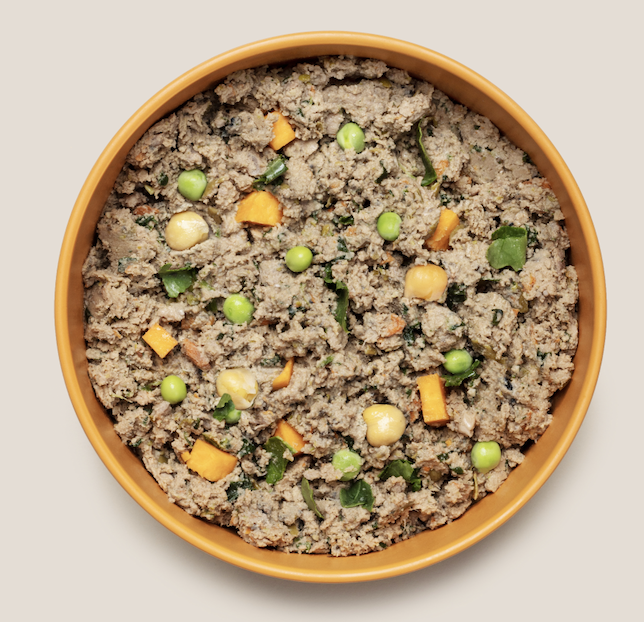
Fresh food is a natural fit for a tiny, coat-proud dog. Ollie recipes are crafted with chefs and veterinary nutritionists to be complete and balanced, made with named proteins and no artificial fillers, and easy for a small dog to eat and digest, which, for a Pom, looks after the coat, the waistline, and a settled stomach all at once.
Build your Pomeranian’s perfectly portioned plan →
How much should I feed a Pomeranian?
There’s no specific number, because the right amount depends on your dog’s weight, spay/neuter status, activity level, and body condition. And feeding needs shift across life stages in a way that matters more for this breed than most.
Because toy-breed pups can be prone to hypoglycemia, or dangerously low blood sugar, very young Pomeranians should eat small meals three to four times a day to keep their energy stable [2]. Adults typically do well on two measured meals daily, and seniors may need adjustments as activity changes.
Across every stage, portion control is the throughline. Poms are small enough that a little overfeeding adds up fast, and their thick coat can hide weight gain, so use your hands to feel for the ribs rather than trusting your eyes [2]. One advantage of a fresh plan like Ollie is that meals arrive pre-portioned to your dog’s profile, which takes the guesswork out of feeding a dog this size.
Pomeranian coat health and diet connection
That double coat, dense undercoat plus longer guard hairs, is built from nutrients, and what you feed shows up directly in how it looks.
Protein matters most, since hair is largely made of it, and a quality, protein-forward diet like Ollie’s gives the body the raw material to grow a full coat. Omega-3 fatty acids (EPA and DHA) bring anti-inflammatory support that helps with shine and skin comfort, while omega-6 fatty acids and minerals like zinc reinforce the skin barrier that keeps the whole coat healthy [6]. A consistent, complete diet, free of artificial junk, is the engine behind a great-looking Pomeranian.
What is the best food for Pomeranians?
So what should actually go in the bowl? For most Pomeranians, the best food checks these boxes:
- Complete and balanced for their life stage, whether puppy, adult, or senior.
- Quality named proteins as the foundation, not vague by-product meals or fillers.
- Omega-3 fatty acids to support that signature coat from the inside [6].
- Appropriately small, nutrient-dense portions, so a tiny dog gets full nutrition without excess calories.
- An easy-to-eat texture that’s kind to small, crowded mouths.
Ollie’s fresh, gently cooked recipes are made around exactly these priorities: clean ingredient lists, crafted with chefs and veterinary nutritionists, and portions tailored to your individual dog. It’s a big reason Pomeranians are among the most popular breeds for Ollie.
Start your Pomeranian’s fresh food plan →
FAQs about Pomeranians
Are Pomeranians high maintenance?
In one area, yes: the coat. That double coat needs regular brushing and routine professional grooming, and Pomeranians also benefit from consistent dental care and early training. In other ways, they’re easy: small, adaptable, and content in an apartment. Think of them as low-space but not low-effort.
What health problems do Pomeranians have?
The most common breed-specific concerns are luxating patella, tracheal collapse, dental disease, and alopecia X (a cosmetic coat condition), along with hypoglycemia in young puppies and some eye and heart issues with age [3][4][5]. Regular vet care and good weight management through fresh, portioned food like Ollie’s do a lot to keep them in check.
What is the best food for a Pomeranian?
A complete, balanced diet built on quality protein, rich in skin- and coat-supporting omega-3s, and portioned for a small dog. Fresh, gently cooked food like Ollie’s is a great choice for most Poms [6].
Is fresh food good for Pomeranians?
Yes. Because Poms are so small, every bite counts, and fresh food like Ollie’s packs complete, human-grade nutrition into the nutrient-dense, precisely portioned meals a tiny dog needs.
How much should a Pomeranian eat per day?
It depends on weight, spay/neuter status, and activity, but the headline is portion control, as Pomeranians are small and easy to overfeed. Puppies need small meals three to four times a day to prevent low blood sugar, while most adults do well on two measured meals [2]. Ask your vet for a target.
Are Pomeranians prone to dental disease?
Yes. Their small jaws crowd the teeth, which makes plaque, tartar, and periodontal disease common in the breed. Daily brushing and regular professional cleanings are what will help prevent it.
Do Pomeranians have sensitive stomachs?
A: Some do. A highly digestible, complete diet with a short, quality ingredient list like Ollie’s tends to sit best, and any food change should be made gradually. If your Pomeranian has ongoing digestive trouble, check in with your vet.
How does diet affect a Pomeranian’s coat?
A lot. Protein supplies the building blocks for hair, and omega-3 and omega-6 fatty acids help keep the coat soft, shiny, and less prone to flaking [6]. A consistent, high-quality diet is one of the most direct ways to support a Pomeranian’s signature fluff.
Are Pomeranians picky eaters?
They can be opinionated, especially if they’ve been offered a lot of treats or table food. Fresh, flavorful, properly portioned meals like Ollie’s tend to win Poms over, and keeping treats to a small share of daily calories helps keep them interested in their actual food.
References and further reading
- American Kennel Club. Pomeranian Dog Breed Information. https://www.akc.org/dog-breeds/pomeranian/
- VCA Animal Hospitals. Pomeranian. https://vcahospitals.com/know-your-pet/dog-breeds/pomeranian
- American Kennel Club. Alopecia X in Dogs: Causes, Symptoms, and Treatment. https://www.akc.org/expert-advice/health/alopecia-x-in-dogs/
- American Kennel Club. Luxating Patella in Dogs: Signs, Symptoms, Treatments. https://www.akc.org/expert-advice/health/luxating-patella-dog/
- American Kennel Club. Tracheal Collapse in Dogs: Signs, Symptoms, Treatments. https://www.akc.org/expert-advice/health/collapsed-trachea-in-dogs/
- VCA Animal Hospitals. The Importance of Your Pet’s Skin and Coat and the Role of Diet. https://vcahospitals.com/know-your-pet/the-importance-of-your-pets-skin-and-coat-and-the-role-of-diet
The Ollie blog is devoted to helping pet parents lead healthier lives with their pups. If you want to learn more about our fresh, human-grade food, check out ollie.com. This article was expertly reviewed by: Catherine Carchedi, MS, DVM; Lindsay Cassibry, MPH, DVM; and Brittany White, PhD.
Disclaimer: This article and the Ollie blog is for informational purposes only and is not a substitute for professional veterinary advice, diagnosis, or treatment. If your dog is showing signs of illness and/or injury, always consult your veterinarian promptly. Every dog is different, and any dietary change should be discussed with your veterinarian. Ollie is not a prescription or therapeutic diet and is not intended to prevent, treat, or manage any medical condition. Always work with your vet to determine the best care plan for your individual pup, especially if they’ve been diagnosed with a health condition.
Tagged As:
The nutrition your dog needs,
the food they want.
Written by:
Marissa Taffer is a consultant, writer and strategist based in Philadelphia. She lives and works with her rescue dog Charlie, a certified therapy dog.


Enjoying our articles? Subscribe our Newsletters and get new articles directly to your inbox
You might also like
30 August 2026
13 MINS READ
Chihuahua: Pros, Cons, and Diet Guide
The Chihuahua packs huge personality into a tiny frame. Learn about Chihuahua pros and cons, temperament, key health concerns, and expert feeding tips.
25 August 2026
10 MINS READ
Shih Tzu: Pros, Cons, and Best Food Guide
Thinking about bringing home a Shih Tzu? This guide breaks down the breed’s personality, grooming needs, and whether it’s the right fit for your life.
25 August 2026
10 MINS READ
Golden Retriever: Pros, Cons, and Diet Guide
Golden retrievers are famously friendly, but they come with unique needs—from heavy shedding to significant health risks like cancer. Discover the pros, cons, and how the right diet supports your…