[EXCLUSIVE] Ollie Blog readers! 70% OFF your First Box + FREE Ollie Hat (for You!) AND Bandana (for Pup!) Try now!
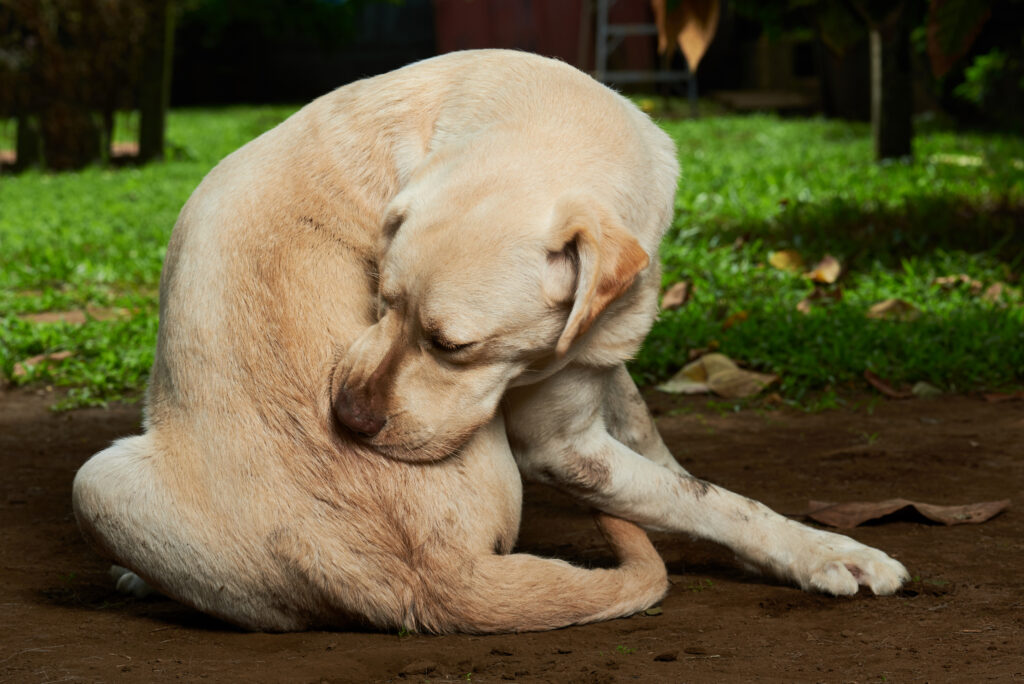

Did you know that “flea” is the common name for the order Siphonaptera, which includes 2,500 species of small flightless insects? While you might not care to learn about all 2,500, what is important is how they can impact your dog, and the rest of your household. Here’s what you should know about this pesky parasite and how you can keep your pup safe.
What are fleas?
Fleas are flightless insects that live as external parasites on both mammals (like you and your dog) and birds. They feed on the blood of their hosts. Note that fleas don’t tend to live on humans since we lack the protection of feathers or fur, which makes it more challenging for them to reproduce. Even though we make lousy hosts, we can still be a tasty snack for a hungry flea. So, if there are fleas in your home, know that you can be bitten.
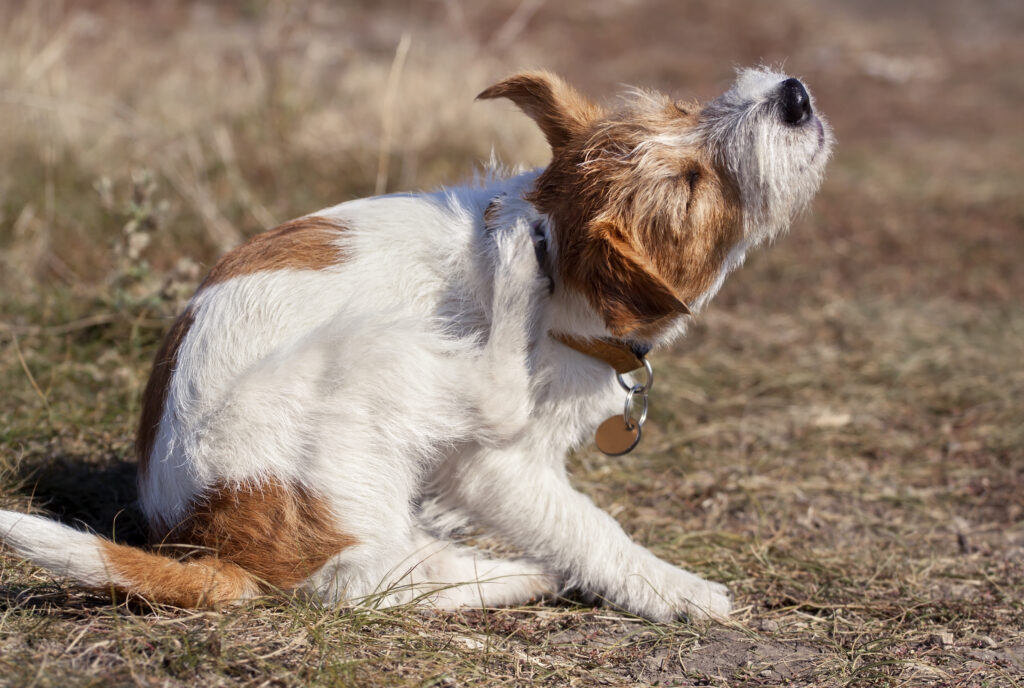
What are the signs of fleas on dogs?
Fleas leave behind some telltale signs—on your dog, on you, and around your home. Here’s what to look for:
Itching
While itching can simply be a sign of allergies or dry skin, it can also mean fleas. If you have an itchy pet, you want to get to the root of why they are itchy so you can treat it. This is especially important if you think there are fleas in your home.
Hair loss
If your pup is constantly itching, or worse—biting at the spots where the fleas are biting them—you might see some patches of hair loss. The hair loss usually comes from the scratching and biting itself, or from an allergic reaction to flea bites. Because it can also signal more serious skin conditions, it’s worth having your vet take a look if you spot hair loss alongside itching.
Welts or red skin
If you see any welts or redness where your pup is itching or has lost hair, these could be from flea bites. The saliva of the flea can cause an allergic reaction.
Pale gums
If your pup is being bitten, they may have pale gums. This is because fleas feed off your pup’s blood and can cause your pup to become anemic.
Restlessness
The itching and discomfort of flea bites can cause your dog to become restless. Some dogs and breeds are more prone to restlessness. If your pup’s demeanor changes or the restlessness seems to come on suddenly, you might want to check for fleas.
Signs of fleas on your body
Bites on your ankles
If you have a serious flea problem in your home or yard, you might start to see bites on your ankles and maybe even your knees. Unlike a spider bite, a flea bite will only have one puncture.
Signs of fleas in your home
Flea dirt
Flea dirt isn’t actually dirt, it’s flea feces, and you’ll want to look carefully for these reddish-brown flecks. While they could be just regular dust or dirt tracked in from the outdoors, if you think you might have fleas in your home, this is another good clue.
Flea eggs in your carpet
To check for flea eggs, put on a pair of gloves and run your fingers through the carpet. You might need a magnifying glass to see the eggs on your gloves, but if you have fleas, you’ll likely see the eggs. When fleas are in your home, they lay their eggs in the carpet because it’s a safe place for them to grow and hatch undisturbed.
How do I get rid of fleas on my dog?
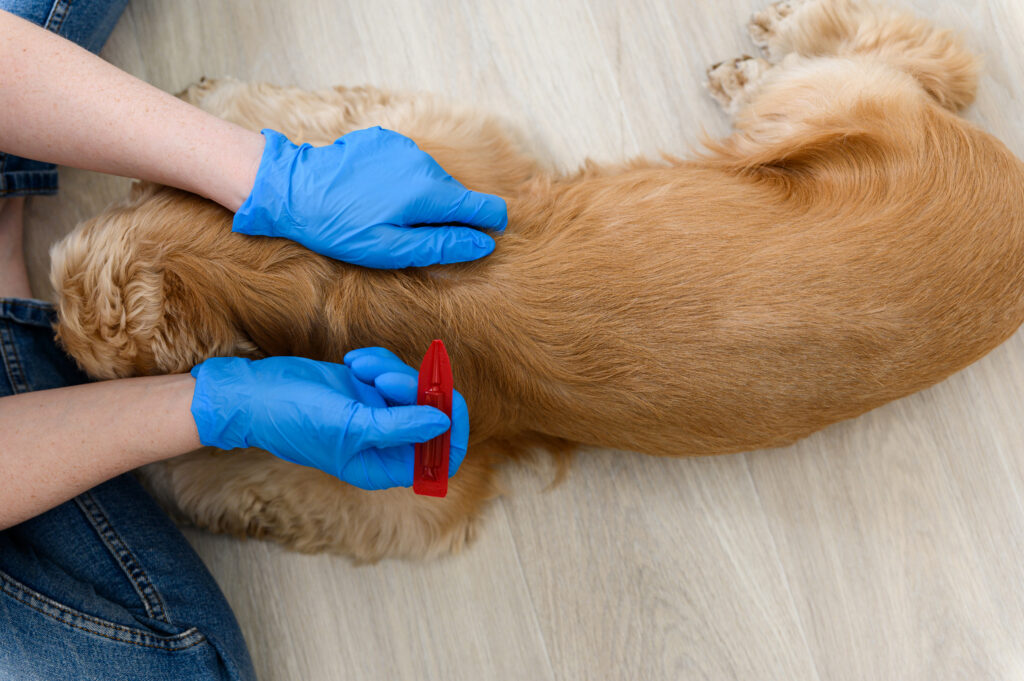
If you find fleas on your dog, you might want to start with a quick call to the vet to ask about topical treatment—especially if you think your pup is reacting to the bites. Use a flea shampoo recommended by your vet, and give your pup a warm, soapy bath. After the bath, work through their coat carefully with a special flea comb to get rid of the dead fleas and flea dirt. As you remove fleas, kill any that are still alive with the warm, soapy water. Using your hands can be challenging since fleas can jump large distances.
Do I need to treat my house if my dog has fleas?
If you find fleas or flea bites on your pup, you will need to treat your house. As we mentioned, fleas typically lay their eggs in the carpet, so even if you don’t currently see any fleas, you might as they hatch. If you don’t treat your dog’s things and your home to ensure the fleas are completely gone, you might have a recurrence.
To get rid of these unwanted guests, start with a powerful vacuum on your carpets, dog bed, couch, and mattress. Once you’re done, remember not to let the vacuum bag linger. Throw it away outside your home. If you’re using a newer bagless model, empty the canister and ensure it is thoroughly cleaned out so no fleas are living in your vacuum.
Then, use an upholstery cleaner powered by steam. The hot, soapy water should kill anything left behind after you vacuum. Be especially diligent about the places your pup likes to sleep.
If the infestation is mild, wash all of your bedding and your pet’s in water that is as hot as you can safely use on the material. If your infestation is particularly bad, you may want to replace your pet’s bedding and maybe even your own.
Treat your home with an insecticide designed to kill all life stages of fleas, including eggs. This is the place where your best bet is to bring in a pro. Ensure that whatever they use is safe for your family and your pet. If not, consider staying elsewhere while your home is being treated. You will most likely need to be out of the house for at least a few hours while the chemicals dry.
How can I prevent fleas on my dog?
There are many preventative options for your dog. Medications like Credelio, Frontline, and NexGard can be prescribed by your vet. For a three-month option, you can ask about Bravecto. There are also options for topical treatments and collars if your pup has contraindications for oral medication. Your vet can help you choose a preventative option that is best for your pup.
Your pup should take their preventative all year round. While fleas prefer warm weather, seeing them in the winter is not impossible, especially if you live in a part of the world with higher temperatures.
By using preventatives as directed, you will likely not need to worry about a flea infestation. However, if one does happen, now you are prepared!
The Ollie blog is devoted to helping pet parents lead healthier lives with their pups. If you want to learn more about our fresh, human-grade food, check out ollie.com. Marissa Taffer also contributed to this article.
Disclaimer: This article and the Ollie blog is for informational purposes only and is not a substitute for professional veterinary advice, diagnosis, or treatment. If your dog is showing signs of illness and/or injury, always consult your veterinarian promptly. Every dog is different, and any dietary change should be discussed with your veterinarian. Ollie is not a prescription or therapeutic diet and is not intended to prevent, treat, or manage any medical condition. Always work with your vet to determine the best care plan for your individual pup, especially if they’ve been diagnosed with a health condition.
Tagged As:

The nutrition your dog needs,
the food they want.
Written by:
Elizabeth Wieck is a New York City–based writer and consultant with more than a decade of experience. She loves telling stories that connect with readers—especially when they involve pets.




Enjoying our articles? Subscribe our Newsletters and get new articles directly to your inbox
You might also like
31 August 2026
6 MINS READ
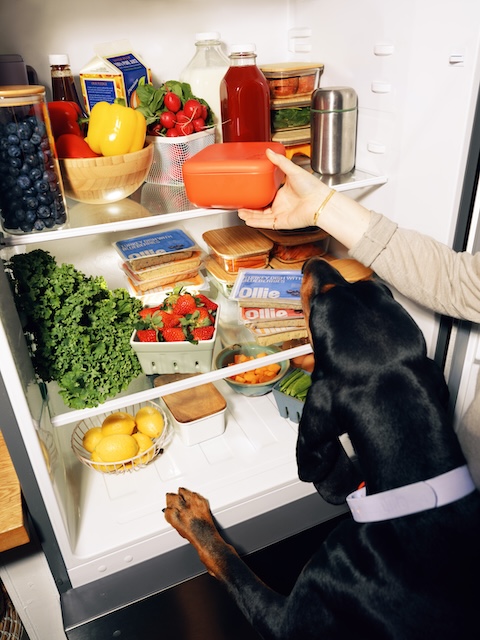
How Long Does Fresh Dog Food Last In The Fridge?
Fresh dog food lasts up to 4 days in the fridge once thawed or opened. Get expert food safety tips on proper storage, freezing, and spotting signs of spoilage from our Food Safety team.
by Christine Miller, Director of Food Safety, Quality, and Regulatory
13 August 2026
6 MINS READ
Puppy Gas: 5 Reasons Your Dog Is Gassy & What To Do About It
Dog gas (i.e., flatulence) can be the butt of many jokes, but this stinky sign may indicate that your pooch has serious digestive distress. Understanding the origins of your pup’s odor can help c…

24 June 2026
12 MINS READ
The Ultimate Dog Food Ingredient Guide: How Much Do Ingredients Actually Matter?
Staring at a dog food label shouldn’t feel like reading a chemistry textbook. Learn how to decode the first 5 ingredients, spot marketing red flags, and understand why your pup needs nutrients, not…