[EXCLUSIVE] Ollie Blog readers! 70% OFF your First Box + FREE Ollie Hat (for You!) AND Bandana (for Pup!) Try now!


What Does Innovation in Dog Food Actually Mean?
If you’ve noticed fresh dog food getting smarter lately, you’re onto something real. Dog food innovation isn’t just marketing hype, it’s a genuine shift in how pet nutrition works.
The Old Way: Generic kibble formulas designed to meet minimum nutritional standards
The New Way: Fresh dog food engineered for optimal health, validated through clinical feeding trials, and personalized to optimize your dog’s microbiome, inflammatory markers, and long-term wellness.
For dog parents like you, the ones who closely watch your pup’s energy, digestion, and health, understanding what real innovation means (versus claims without science) actually matters. Because not all fresh dog food is created equal. Some brands skimp on ingredient sourcing, skip safety testing, or make health claims they can’t back up.
So what separates genuine pet food innovation from clever marketing? And how do you spot a brand that actually walks the walk?
The Shift from Commodity to Preventative Wellness
For decades, the pet food industry was essentially a commodity market. The main goals were long shelf life and mass production. But as a dog parent who sees your pup as a soul family member, you know that standard isn’t quite high enough anymore. You want proactive care, not just basic sustenance.
Nutrition innovation within the dog food industry means understanding that a dog’s diet isn’t just about avoiding hunger; it’s an investment in their optimal health, longevity, and vitality. Today’s advancements are driven by a deeper understanding of canine biology at the molecular level, the intersection of genomics, microbiome science, and preventive nutrition. We are actively investing to better understand how to engineer fresh food that optimizes biomarkers (inflammatory proteins, lipid profiles, microbial diversity) that we believe will directly predict healthy aging, joint resilience, and disease prevention.
It’s no longer just about feeding a pet; it’s about providing precision wellness that supports healthy aging, reduces the likelihood of complex veterinary interventions, and keeps them excited and tap-dancing while you scoop their food.
Cellular Nutrition Meets Real Food
The frontier of pet nutrition isn’t just feeding a dog well. Fresh food, by design, delivers nutrients in their most bioavailable form. Intact proteins retain amino acid profiles that support muscle preservation in aging dogs. While enzymes are heat-sensitive and likely inactivated during cooking, our gentle processing preserves other key nutrients that support digestive efficiency and nutrient absorption. Polyphenols and antioxidants from real vegetables combat cellular inflammation, the root cause of aging, arthritis, and metabolic decline.
The Science of 2026 Dog Nutrition: What’s Changed
Dog nutrition in 2026 looks fundamentally different than it did a decade ago. “Complete and balanced” used to be the finish line. Today, it’s the starting point.
- From “Meets Minimums” to “Optimizes Biomarkers”
For years, brands competed on meeting nutritional minimums. The question was: Does this food contain enough protein, fat, and vitamins?
Today’s innovation asks a harder question: How does this food optimize your individual dog’s health?
Biomarkers—measurable indicators of health at the cellular level, are reshaping how we think about nutrition. Instead of assuming a formula works for all dogs, innovative brands measure what actually matters:
- Inflammatory biomarkers (C-reactive protein, TNF-alpha): Chronic inflammation drives aging, arthritis, cognitive decline, and disease
- Lipid profiles (cholesterol, triglycerides): Cardiovascular and metabolic health indicators
- Microbiome diversity (bacterial species richness): The diversity of beneficial bacteria in the gut predicts immune function, nutrient absorption, and longevity
- Antioxidant status (oxidative stress markers): How well your dog’s body can fight cellular damage
This shift from generic “complete and balanced” to personalized biomarker optimization is the real innovation. It’s why precision nutrition matters, because one diet doesn’t optimize every dog.
- From “Generic Wellness” to “Microbiome-First Health”
Here’s something most pet food brands still don’t talk about: Your dog’s microbiome (the ecosystem of bacteria in their gut) controls approximately 70% of their immune function.
The microbiome isn’t just about digestion. It’s the control center for:
- Immune strength: A healthy microbiome trains the immune system; a degraded microbiome leads to chronic inflammation and disease
- Nutrient absorption: Beneficial bacteria produce short-chain fatty acids that improve nutrient uptake from food
- Metabolic health: Microbiome diversity directly impacts weight management and metabolic efficiency
- Brain-gut axis: The gut microbiome influences behavior, anxiety, cognition, and stress response
Fresh food innovation focuses on feeding the microbiome through:
- Prebiotics: Fiber sources (sweet potato, pumpkin, dried chicory root) that feed beneficial bacteria
- Postbiotics: Metabolic byproducts of beneficial bacteria, preserved through gentle cooking
- Polyphenols: Plant compounds with anti-inflammatory and prebiotic properties
From “Symptom Management” to “Inflammation Prevention”
Chronic, low-level systemic inflammation, called inflammaging, is the common thread connecting most age-related diseases in dogs:
- Arthritis and joint degeneration
- Cognitive decline and dementia
- Metabolic dysfunction and obesity
- Autoimmune disease
- Cancer risk
For years, veterinary nutrition focused on managing these symptoms once they appeared. Modern nutrition focuses on preventing inflammation before it starts.
Why fresh food wins here: High-heat processing (like kibble extrusion at 300°F+) creates inflammatory compounds called Advanced Glycation End Products (AGEs). Fresh food prepared at 160–190°F preserves anti-inflammatory nutrients and avoids this problem.
Clinical Validation Through the Super Study
We are conducting a comprehensive 6-month AAFCO feeding trial, known as our Super Study, which directly compares our Ollie Fresh Chicken recipe to traditional kibble.
We aren’t just looking at whether dogs like the taste, we are measuring crucial internal health metrics at the cellular level: systemic inflammatory biomarkers, fecal metabolites, Advanced Glycation End Products (AGEs), and fecal microbiome diversity. The canine gut microbiome essentially drives immune function, digestion, metabolic efficiency, and longevity potential.
By measuring specific markers like AGEs and fecal metabolites alongside systemic inflammatory biomarkers, our “Super Study” provides a deeper level of validation than a standard AAFCO trial, showing exactly how fresh food supports better digestibility and an optimized gut.
What does our AAFCO Super Study mean for you? Better digestion so you don’t have a “How do I pick this poop up?” moment on your morning walk, plus the dog health optimization that keeps your dog thriving for years to come.
Behind Every Bowl: Safety & Quality Controls
Innovation means nothing if the food isn’t safe. Ollie manufactures under 21 CFR 117 (human food standards)rather than 21 CFR 507 (animal feed standards), a significantly stricter regulatory framework. Here’s what that looks like in practice:
- Batch-by-Batch Pathogen Testing: Every batch is tested for Salmonella, Listeria, and E. coli before release. This proactive testing prevents contamination from ever reaching your dog’s bowl.
- Cold Chain Precision: Products are frozen immediately after gentle cooking to halt bacterial growth. Temperature-controlled fulfillment centers and algorithm-calculated dry ice packaging based on location and weather ensure consistent freezing throughout transit.
- Ingredient Traceability: USDA-certified, human-edible ingredients are tracked from supplier through production. If any safety concern arises, we can identify exactly which batches are affected.
- Co-Manufacturing Standards: Specific to our fresh food, partners meet USDA Process Verified Program (PVP) certification, the gold standard for fresh food manufacturing.
You don’t need to wonder what’s in your dog’s food. You know exactly where every ingredient came from and how it was handled.
Digital Health Integrations for Proactive Care
You probably know your dog’s bathroom habits better than your own. But what if you could turn those daily observations into actionable health data? The next frontier of pet food innovation extends far beyond the kitchen and right into your smartphone. We’re integrating digital health tools to create a preventative feedback loop that adapts to your dog in real-time.
Through our digital health ecosystem, members can do Stool Quality Check-Ins right from their app. You upload a photo of your dog’s stool, and it is analyzed by the Ollie Health Team within 24 hours. Our AI-powered detection models, trained by over 1,000 expert annotations from board-certified veterinary nutritionists, achieve 73.9% precision to automatically release routine results. This isn’t guesswork. This is clinical-grade insight powered by veterinary expertise.
We also track weight fluctuations and body condition scores over time, creating a longitudinal health profile of your dog’s wellness trajectory.
If a screening shows optimal results, you just keep doing what you’re doing. If issues are detected, our personalized nutrition algorithm, trained by over 1,000 expert annotations from veterinary nutritionists, can suggest a proactive recipe switch or a portion adjustment. It’s comprehensive care that leads to clear eyes, a full heart, and a pup that just can’t stop chasing their own tail.
The Functional Ingredients Driving Health at the Molecular Level
Fresh food innovation isn’t just about removing bad ingredients, it’s about strategically including functional nutrients that modern kibble can’t deliver.
Omega-3 Fatty Acids (from fish oil & marine microalgae oil)
These aren’t just for shiny coats. Omega-3s are anti-inflammatory powerhouses that:
- Actively reduce systemic inflammatory biomarkers (the kind that drive aging and disease)
- Support cognitive function and brain health in aging dogs
- Optimize joint mobility and reduce arthritis inflammation
- Regulate immune response and reduce autoimmune reactivity
Fresh food retains these fragile nutrients, high-heat kibble processing destroys them.
Beneficial Compounds & Pre/Postbiotics
Gentle cooking (160–190°F) preserves key nutrients and beneficial compounds that support digestive efficiency and nutrient absorption. When combined with prebiotic fiber (like pumpkin, sweet potato, chicory root), these ingredients feed beneficial bacteria and create an optimal microbiome, the foundation of immune health and metabolic efficiency.
Postbiotics, the metabolic byproducts of beneficial bacteria, are preserved through gentle processing and are stable in all pet food applications. These compounds directly improve intestinal barrier function and reduce systemic inflammation.
Antioxidant-Rich Vegetables
Carrots, spinach, and blueberries contain polyphenols and carotenoids that combat cellular oxidative stress, a primary driver of aging and chronic disease. These compounds are delicate; they survive gentle cooking but are destroyed by kibble extrusion temperatures.
Polyphenols also function as prebiotics, feeding beneficial bacteria in the microbiome. This is why real vegetables matter, they’re not just nutrients, they’re functional ingredients that work at multiple levels.
Why One Recipe Isn’t Enough Anymore
When it comes to biological needs, one size definitely does not fit all. Your dog’s age, weight, activity level, inflammatory status, and microbiome profile demand a specific approach. That’s why genuine nutritional innovation requires variety and targeted solutions.
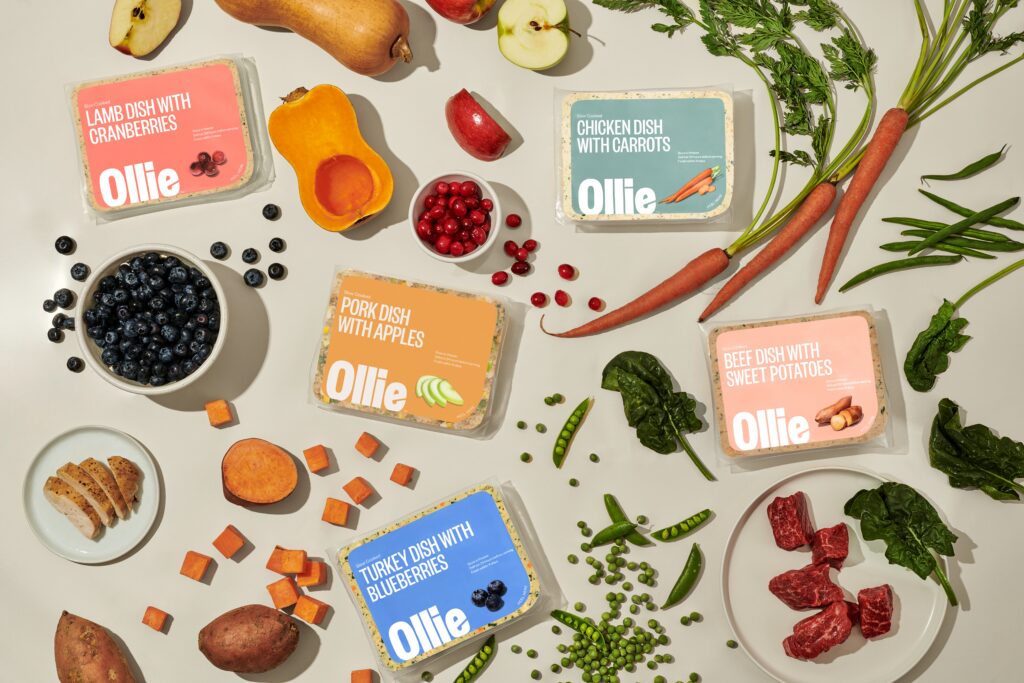
To ensure every dog gets exactly what they need, we offer five fresh recipes (Beef, Chicken, Turkey, Lamb, Pork) and three baked formulas. (Each recipe is backed by board-certified veterinary nutritionists and tested to meet AAFCO standards for complete and balanced nutrition across all life stages.)
This diversity allows you to seamlessly switch recipes if your dog has an evolving palate or emerging sensitivities. We do the heavy lifting in research and formulation so you can focus on the fun stuff, like deciding which matching outfits to wear this weekend.
Targeted Formulations, Not Generic Kibble
Each recipe is purpose-designed to optimize specific health markers:
- Beef: High in bioavailable iron and B vitamins; high carnitine content supports heart health and muscle preservation in active dogs and seniors
- Chicken: Lean protein with selenium and B6; ideal for weight management, sensitive digestion, and reducing inflammatory markers
- Turkey: Novel protein for dogs with chicken sensitivities; rich in amino acids for immune function
- Lamb: High in carnitine for heart health; omega-3 profile supports joint health, cognitive function, and inflammaging prevention
- Pork: Unique amino acid signature; lower allergen profile for sensitive dogs
This diversity isn’t marketing, it’s nutritional precision. Your dog’s age, activity level, inflammatory biomarkers, and microbiome diversity determine which recipe optimizes their cellular health and longevity.
We Obsess So You Don’t Have To
Feeding your dog should be a joyful ritual, not a source of stress. The rapid advancements in fresh food, personalized algorithms, and clinical validation mean that you can evaluate trends and ingredients with total confidence. We’re obsessed with the science, the data, and the rigorous testing so you can simply enjoy the results.
Because when your dog has a sleeker coat that really shines in real life and in all your pictures, and the strong joints to keep them following your every move, and the microbiome diversity that powers immune strength, you know you’re doing this whole dog-parenting thing exactly right.
What Makes Innovation Real?
Dog food innovation isn’t just buzzwords or marketing claims. Real innovation in 2026 means:
✓ Biomarker Optimization: Measuring what actually matters (inflammation, lipids, microbiome diversity) instead of just meeting minimums
✓ Microbiome-First Approach: Building gut health as the foundation for overall wellness, not just digestion
✓ Transparent Sourcing: Knowing exactly where ingredients come from and how they’re handled
✓ Science-Backed Validation: Clinical trials, biomarker measurement, and third-party testing, not guessing
✓ Safety Standards: Batch testing, pathogen prevention, and traceability that exceeds industry minimums
✓ Functional Purpose: Every ingredient serves a cellular-level health benefit, not filler bulk
✓ Personalization: Recognizing that one diet doesn’t optimize every dog, recipes designed for different needs
✓ Longevity Focus: Feeding for healthy aging and disease prevention through inflammation control, not just basic sustenance
When you evaluate pet food innovation, look for brands that commit to these principles. Because your dog doesn’t just deserve fresh food—they deserve food designed with precision, backed by science, and built for cellular health and longevity.
- Seizures: Consider vet-prescribed ketogenic or MCT formulas
- Senior dogs: Fresh, easily digestible, moisture-rich
- Puppies: Proper calcium-to-phosphorus ratio, named proteins
The Ollie blog is devoted to helping pet parents lead healthier lives with their pups. If you want to learn more about our fresh, human-grade food, check out ollie.com.
Disclaimer: This article and the Ollie blog is for informational purposes only and is not a substitute for professional veterinary advice, diagnosis, or treatment. If your dog is showing signs of illness and/or injury, always consult your veterinarian promptly. Every dog is different, and any dietary change should be discussed with your veterinarian. Ollie is not a prescription or therapeutic diet and is not intended to prevent, treat, or manage any medical condition. Always work with your vet to determine the best care plan for your individual pup, especially if they’ve been diagnosed with a health condition.
Tagged As:

The nutrition your dog needs,
the food they want.
Written by:
Brittany is the Vice President of Research, Development, & Engineering (RD&E) and Commercial Enablement at Ollie, bringing over 12 years of specialized experience in the pet food industry. Her recent work has been marked by a focus on innovation and strategic leadership, driving advancements in pet food and optimizing product development processes. With a PhD in Food Science from the University of Arkansas, Brittany has established a reputation for her technical expertise and visionary approach. She has authored over 15 peer-reviewed publications, contributing valuable research to the field. Her work has driven significant advancements in product development and formulation in various roles throughout her career. Brittany’s leadership extends beyond her professional roles, as she has been an influential figure in the pet food industry, participating as a speaker at major conferences such as the Pet Food Processing Exchange and Pet Food Forum. She is also actively involved in professional organizations, including the Institute of Food Technologists (IFT) and the American Society of Animal Science (ASAS). At Ollie, Brittany is committed to transforming pet nutrition through cutting-edge solutions, ensuring that every product supports dogs in leading happier, healthier lives.




Enjoying our articles? Subscribe our Newsletters and get new articles directly to your inbox
You might also like
17 September 2026
6 MINS READ
Lester’s Remarkable Recovery with Ollie: A Journey from Rescue to Revival
How can Ollie help your pup? Learn about one dog’s journey to health with Ollie!
by Ollie Pets
24 June 2026
12 MINS READ
The Ultimate Dog Food Ingredient Guide: How Much Do Ingredients Actually Matter?
Staring at a dog food label shouldn’t feel like reading a chemistry textbook. Learn how to decode the first 5 ingredients, spot marketing red flags, and understand why your pup needs nutrients, not…

16 June 2026
3 MINS READ
The Poop Scoop: Dog Digestion Myths Debunked
Is your dog’s digestive health on the right track? From decoding stool consistency to separating fiction from fact on kibble vs. fresh food, we’re debunking the biggest myths around your pup’…